

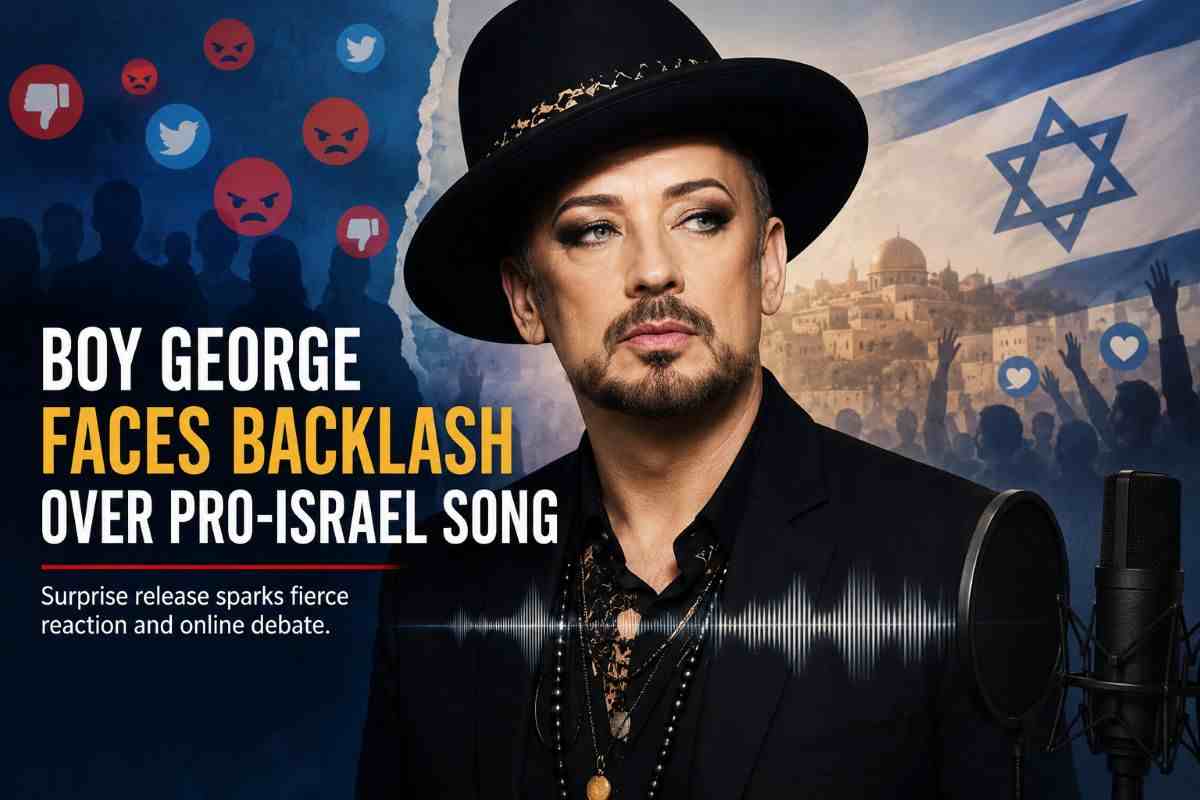
Boy George has found himself at the centre of a fresh controversy after releasing a surprise song expressing support for Israel, prompting strong reactions from fans, campaigners and fellow social media users. The track has reignited debate over whether artists should publicly take sides in one of the world’s most divisive conflicts—and what happens when they do.
For many readers, the bigger question is not simply what Boy George released, but why the reaction has been so intense. The answer lies in the highly polarised nature of the Israel-Gaza conflict, where public statements from celebrities increasingly attract scrutiny from supporters on all sides. (The Guardian)
Table of Contents
What’s actually true?
The Culture Club frontman shared a new reggae-inspired song titled “Od Nirkod (We Will Dance Again)” directly on his X account rather than releasing it through major streaming services. The title references a phrase associated with survivors of the 7 October Hamas attack on the Nova music festival in Israel. (euronews)
The lyrics defend Israel’s military response following the Hamas attacks and reject descriptions of the war in Gaza as genocide. Those views have attracted widespread criticism because they conflict with findings and allegations made by several international organisations, including United Nations bodies and human rights groups. Israel has consistently rejected accusations that it is committing genocide in Gaza. (euronews)
Within hours of the song’s release, social media platforms filled with criticism from many users, while others praised Boy George for expressing views they believe are underrepresented in the entertainment industry. The divided reaction reflects broader public disagreement rather than a consensus in either direction. (euronews)
How this connects to celebrity activism and public opinion
The controversy highlights a wider trend: celebrities are increasingly expected to take positions on major global events, yet doing so often carries significant reputational risks.
In recent years, musicians, actors and sports stars have faced pressure from audiences to speak out—or remain silent—on conflicts, humanitarian crises and political issues. Social media has amplified that pressure, allowing public reactions to spread almost instantly.
For UK audiences, this means headlines about entertainers are no longer just about music or films. Public figures are now judged as much on their political statements as on their creative work.
Whether Boy George’s latest release affects future performances, collaborations or commercial opportunities remains uncertain. However, it is another example of how cultural figures can become central to wider political conversations.
Common misconceptions
One common misconception is that criticism of a celebrity automatically reflects the opinion of the wider public. In reality, online reactions often represent the most vocal participants rather than a complete picture of public sentiment.
Another misunderstanding is that artists have a legal or professional obligation to remain politically neutral. In the UK, musicians generally have the same freedom of expression as anyone else, provided they stay within the law. However, exercising that freedom can bring commercial and reputational consequences.
Finally, many social media posts present complex international issues as simple “good versus bad” narratives. The Israel-Gaza conflict involves competing historical, legal and humanitarian perspectives that cannot be fully captured in viral posts or short video clips.
What to do next
If you’re following this story, it’s worth reading reports from a range of established news organisations rather than relying solely on clips circulating on social media.
Where claims involve international law or humanitarian allegations, look for reporting that distinguishes between allegations, official findings, government responses and verified facts.
If the issue matters to you, consider consulting statements from recognised international organisations alongside reporting from multiple reputable news outlets before forming conclusions.
Key takeaways
Boy George’s surprise release has generated significant backlash because it addresses one of the world’s most contentious ongoing conflicts. The controversy is less about the music itself than the political message it conveys and the broader debate over celebrity activism.
As public figures continue to weigh in on international events, strong reactions are likely to remain part of the landscape. Understanding the context—and separating verified facts from opinion—remains the best way for readers to navigate these rapidly developing stories.
