

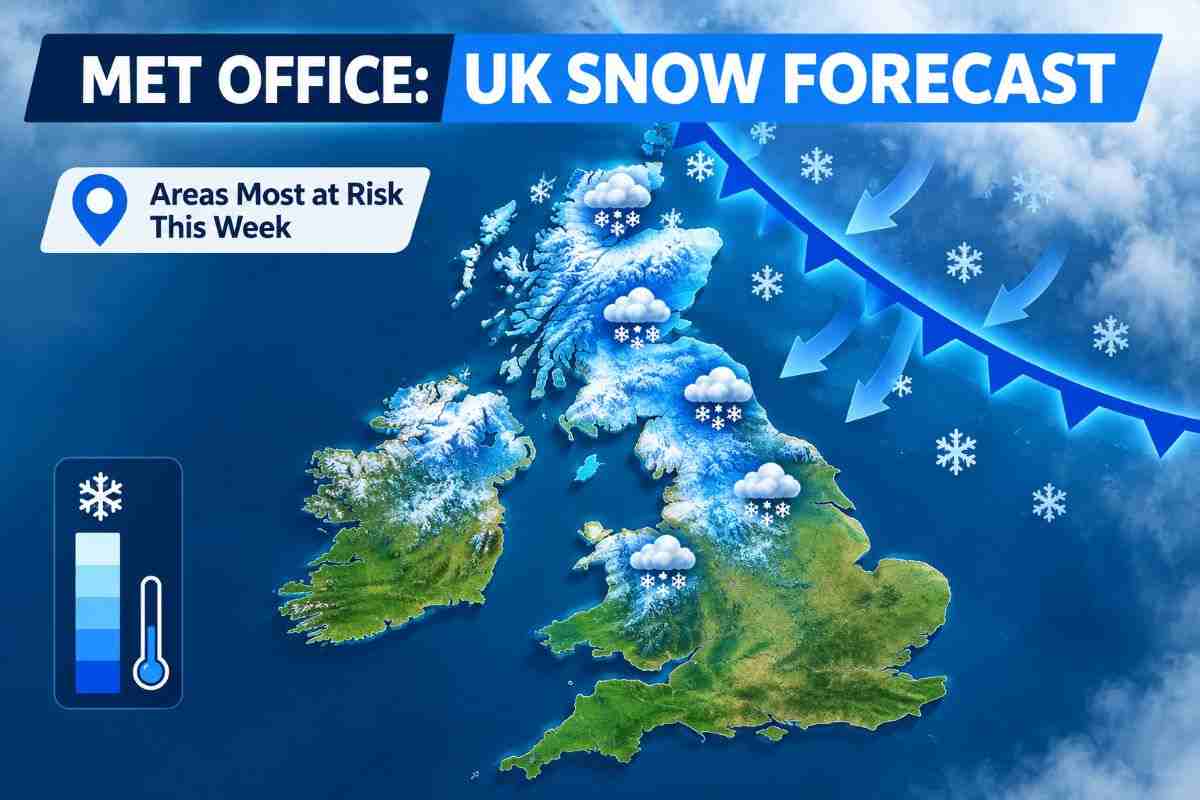
The prospect of the UK’s first wintry weather is raising questions about where snow could fall, whether roads might be affected and if colder conditions are on the way. The latest forecast points to a brief chance of snow over higher ground in Scotland, but the outlook does not suggest widespread snowfall across the country. The Independent+1
For anyone planning a journey or preparing for the colder months, the key distinction is between a forecast of isolated snow flurries and conditions likely to cause significant disruption.
Table of Contents
Where could snow fall this week?
According to reporting published on 27 October, the areas to watch are parts of the Scottish Central Highlands, including locations near Loch Rannoch and Pitlochry. Snow was forecast for a short period in the early hours of Wednesday, 28 October, mainly over higher ground. The Independent
The Met Office’s broader forecast for Wednesday says showers should increasingly become confined to Scotland as high pressure builds from the south. Most other areas are expected to experience drier conditions, with sunny spells and temperatures generally a little above average for the time of year. Met Office
That means the forecast should not be interpreted as a prediction of snow across every part of Scotland, let alone England, Wales and Northern Ireland.
Why is snow forecast in Scotland?
Snow becomes more likely when cold air meets moisture in the atmosphere. Higher ground is particularly exposed because temperatures generally fall with altitude, allowing precipitation that would fall as rain at lower levels to turn to snow.
Scotland’s mountains and elevated inland areas can therefore experience wintry showers even when towns and cities elsewhere remain relatively mild. However, whether snow settles depends on ground temperatures, the intensity of the showers and local conditions.
The latest national forecast also points towards calmer weather later in the week, with fog potentially becoming more widespread on Thursday and Friday. Met Office+1
Could snow disrupt travel across the UK?
For most people, the immediate concern is whether the weather will affect commuting, school journeys or longer trips.
A brief snow shower over the Highlands does not automatically mean widespread disruption. The greater risk arises when snow settles on roads, temperatures fall below freezing or ice forms on untreated surfaces.
Drivers travelling through rural and higher parts of Scotland should check local conditions before setting off, particularly during the early morning. Even without snowfall, fog could reduce visibility later in the week.
Three things people often get wrong about the snow forecast
- A snow forecast does not mean snow is guaranteed. Forecast maps indicate where wintry precipitation is possible, not necessarily where it will settle.
- The first flurries do not signal a nationwide cold snap. Weather can vary considerably between Scotland and southern England, even on the same day.
- No snow warning does not mean every journey is risk-free. Rain, strong winds, fog and overnight ice can also create difficult travel conditions.
The Met Office issues weather warnings according to the expected impacts of hazardous conditions, so checking the warning map is more useful than relying on dramatic social media headlines. Met Office+1
What should you do next?
Before travelling, check the latest Met Office UK forecast and weather warnings. If you are heading into the Scottish Highlands, check the forecast for your specific destination rather than relying on the national outlook alone.
Allow extra time if driving in poor visibility, keep your windscreen clear and carry suitable clothing for colder conditions. If you have a longer journey planned, check for road or rail updates before leaving.
The bottom line
The areas highlighted for possible snow are the Scottish Central Highlands, particularly around Loch Rannoch and Pitlochry. The forecast concerns a short spell of possible snowfall over higher ground, rather than a confirmed blanket of snow across Britain.
