Close Menu
    Facebook X (Twitter) Instagram
    Facebook X (Twitter) LinkedIn
    The Business TimeThe Business Time
    Subscribe
    • London
    • Business
    • Finance
    • Marketing
    • Technology
      • Auto
    • Education
    • Entertainment
    • Lifestyle
      • Travel
      • Food
    The Business TimeThe Business Time
    Home»NEWS»Your Pension Could Face 40% Tax When You Die: What’s Changing in April 2027?
    NEWS

    Your Pension Could Face 40% Tax When You Die: What’s Changing in April 2027?

    EditorBy EditorNovember 25, 2026No Comments5 Mins Read NEWS
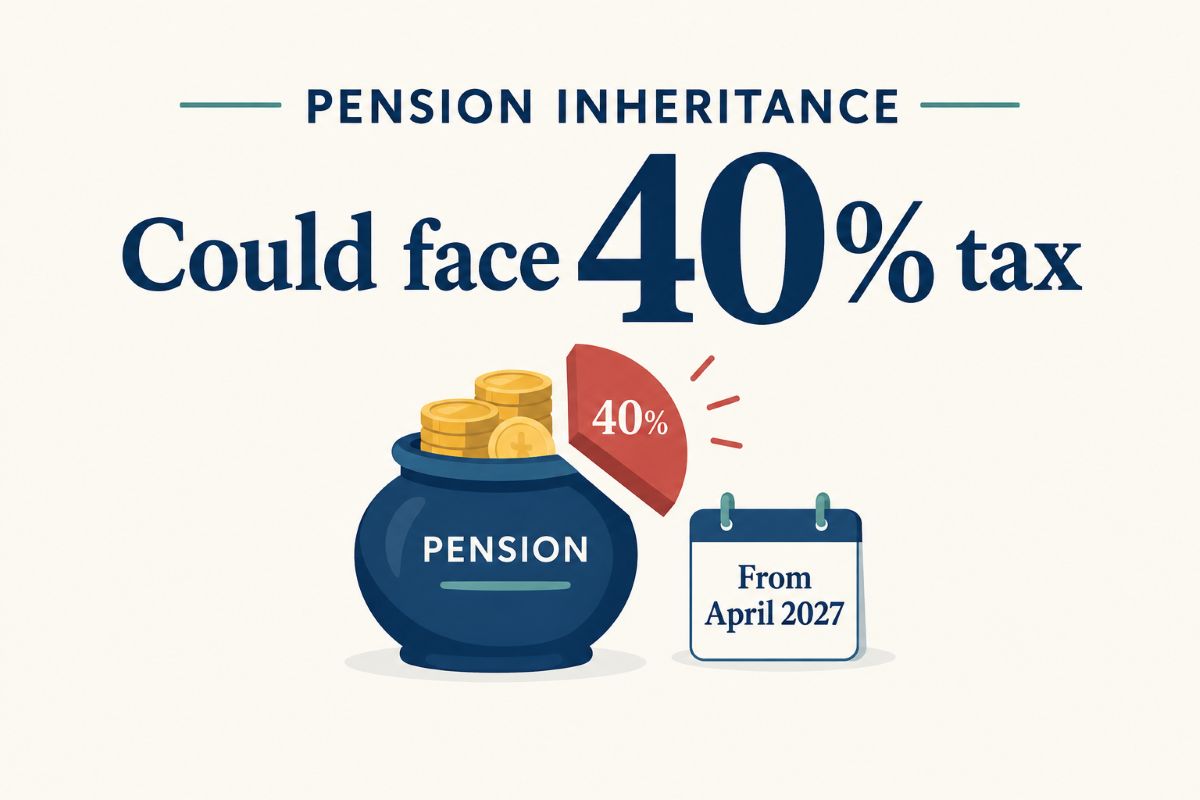
    Pension Inheritance Tax What Changes in April 2027
    Share
    Facebook Twitter LinkedIn Pinterest Email

    A pension pot that has taken decades to build could leave less behind for loved ones under a major tax change coming to the UK in 2027. From April, most unused pension funds will be brought within the scope of Inheritance Tax, potentially increasing the amount some families owe when someone dies. But does this mean the government will automatically take 40% of your pension? Not quite.

    Table of Contents

    • What’s actually changing with pensions in 2027?
    • Could your family face both Inheritance Tax and Income Tax?
    • Who could be affected most?
    • Common misconceptions about the 2027 pension tax changes
    • What should pension holders do before April 2027?
    • What happens next?

    What’s actually changing with pensions in 2027?

    From 6 April 2027, most unused pension funds and pension death benefits will be included in the value of a person’s estate when calculating Inheritance Tax (IHT).

    Under the current arrangements, many pension pots held in defined contribution schemes can pass to beneficiaries outside the deceased person’s estate for Inheritance Tax purposes. This has made pensions a useful way of passing wealth to family members.

    The new rules will change that treatment. Unused pension savings will generally be counted alongside other assets, such as property, savings and investments, when working out whether an estate owes Inheritance Tax.

    However, the headline 40% figure needs some explanation. It is the standard Inheritance Tax rate on the taxable portion of an estate above the available tax-free allowances. It does not mean every pension pot will automatically lose 40% of its value.

    The amount due will depend on the overall estate, available allowances, exemptions and the people receiving the pension benefits.

    Importantly, the change applies to deaths occurring on or after 6 April 2027. If someone dies before that date, the existing rules will apply, even if their pension benefits are paid out afterwards.

    Could your family face both Inheritance Tax and Income Tax?

    This is another important question that pension holders and their beneficiaries should understand.

    Inheritance Tax and Income Tax are separate charges. The first concerns the value of the estate, while the second can apply when a beneficiary receives or withdraws inherited pension money.

    Under existing pension death benefit rules, the age at which someone dies can make a significant difference.

    If the pension holder dies before their 75th birthday, qualifying inherited pension benefits are generally free of Income Tax, subject to the relevant conditions and allowances.

    If they die aged 75 or older, beneficiaries will generally pay Income Tax at their own applicable rate when they receive taxable pension benefits.

    The 2027 changes do not simply replace these existing Income Tax rules. Instead, they introduce an additional Inheritance Tax consideration.

    HMRC has also clarified that where Inheritance Tax is paid on inherited pension benefits, the corresponding amount should be excluded when calculating the beneficiary’s taxable pension income. This is intended to prevent the same portion of the pension being taxed twice in the relevant circumstances.

    Who could be affected most?

    The biggest impact is likely to fall on families whose combined assets and unused pension savings push the estate above the available Inheritance Tax allowances.

    For example, someone who owns a valuable property, holds substantial savings and still has a sizeable pension pot could find that more of their wealth becomes taxable under the new arrangements.

    There are also important exemptions.

    Pension benefits passing to an eligible surviving spouse or civil partner can qualify for the spouse or civil partner exemption, subject to the applicable residence conditions. This means the new rules will not necessarily create an immediate Inheritance Tax bill when pension wealth passes between married couples or civil partners.

    Certain other benefits are also excluded, including qualifying death-in-service payments from registered pension schemes and specified dependant’s pensions.

    Consequently, the impact will vary considerably between households.

    Common misconceptions about the 2027 pension tax changes

    There are several points worth clearing up before making financial decisions.

    Myth 1: Everyone’s pension will be taxed at 40%.

    No. Inheritance Tax is calculated on the taxable estate after relevant allowances and exemptions. Many estates will still have no Inheritance Tax liability.

    Myth 2: The rules apply to everyone who dies from now on.

    No. The new treatment applies to deaths on or after 6 April 2027, not earlier deaths where pension payments happen to be delayed.

    Myth 3: Spouses will automatically face a new pension tax bill.

    No. Qualifying transfers to spouses and civil partners can remain exempt from Inheritance Tax.

    Myth 4: Pension beneficiaries will never face Income Tax as well.

    This is incorrect. Income Tax treatment depends on the circumstances, including the deceased’s age and the type of death benefit. The two tax systems must be considered separately.

    What should pension holders do before April 2027?

    There is no need to make rushed decisions, but the approaching changes provide a good reason to review your retirement and estate plans.

    Start by checking the value of your pension savings, particularly if you have several workplace or private pension arrangements. Make sure your family or executors know where these pensions are held.

    Review your will and pension expression-of-wish forms. These documents serve different purposes, but keeping your wishes clear can help reduce uncertainty for those dealing with your estate.

    It is also worth considering your wider estate, including property, investments, savings and any available Inheritance Tax allowances.

    If your estate could be affected, speak to a qualified financial adviser or tax specialist before withdrawing pension money, transferring assets or changing your retirement strategy. Taking money out of a pension simply to avoid the new rules could create other tax consequences.

    What happens next?

    The 6 April 2027 deadline is approaching, and HMRC is continuing to develop guidance and administrative arrangements for pension providers, executors and beneficiaries.

    The central message is straightforward: unused pensions will no longer sit outside Inheritance Tax calculations in most cases. However, the 40% headline does not mean every family will lose that proportion of its pension savings.

    Understanding how the new rules interact with your estate, pension benefits and existing tax allowances is the best starting point for protecting your family’s financial plans.

    Share. Facebook Twitter Pinterest LinkedIn Tumblr Email
    Previous ArticleFrom AI Strategy to Production: A Practical Guide to AI Application Development.
    Editor

    Related Posts

    Business Start-Up Loans UK: Eligibility, Costs and How to Apply in 2027

    November 10, 2026

    Met Office Names UK Areas Where Snow Could Fall This Week — Latest Forecast

    October 28, 2026

    Pensioners Could Get £300 This Winter — Who Needs to Claim Before the Deadline?

    October 14, 2026
    Latest Post

    Your Pension Could Face 40% Tax When You Die: What’s Changing in April 2027?

    November 25, 2026

    From AI Strategy to Production: A Practical Guide to AI Application Development.

    November 25, 2026

    How to Evaluate a Franchise Agreement in the UK Before Signing

    November 24, 2026

    Business Start-Up Loans UK: Eligibility, Costs and How to Apply in 2027

    November 10, 2026

    Met Office Names UK Areas Where Snow Could Fall This Week — Latest Forecast

    October 28, 2026

    Small Business Cybersecurity Checklist: Essential Protection for UK Businesses

    October 27, 2026

    The EV Repair Gap: Why Independent Garages Need a Funding Plan Before the Work Arrives

    October 23, 2026

    Everyone Has a Plan Until the Plan Disappears | Matthew Bennett (Willow Ethos) 

    October 20, 2026

    How the Right Surface Preparation Techniques Improve Coating Adhesion

    October 18, 2026

    Pensioners Could Get £300 This Winter — Who Needs to Claim Before the Deadline?

    October 14, 2026
    About
    About

    Welcome to The Business Time – UK’s Leading Business Magazine. We are a UK-based business magazine that covers all trending and relevant business stories around UK.

    Facebook X (Twitter) LinkedIn
    Latest Post

    Your Pension Could Face 40% Tax When You Die: What’s Changing in April 2027?

    November 25, 2026

    From AI Strategy to Production: A Practical Guide to AI Application Development.

    November 25, 2026

    How to Evaluate a Franchise Agreement in the UK Before Signing

    November 24, 2026
    Quick Links
    • London
    • Business
    • Finance
    • Marketing
    • Technology
      • Auto
    • Education
    • Entertainment
    • Lifestyle
      • Travel
      • Food
    © 2026 The Business Time.
    • About Us
    • Privacy Policy
    • Write for us
    • Contact us

    Type above and press Enter to search. Press Esc to cancel.

    We use cookies on our website to give you the most relevant experience by remembering your preferences and repeat visits. By clicking “Accept”, you consent to the use of ALL the cookies.
    Cookie settingsACCEPT
    Manage consent

    Privacy Overview

    This website uses cookies to improve your experience while you navigate through the website. Out of these, the cookies that are categorized as necessary are stored on your browser as they are essential for the working of basic functionalities of the website. We also use third-party cookies that help us analyze and understand how you use this website. These cookies will be stored in your browser only with your consent. You also have the option to opt-out of these cookies. But opting out of some of these cookies may affect your browsing experience.
    Necessary
    Always Enabled
    Necessary cookies are absolutely essential for the website to function properly. These cookies ensure basic functionalities and security features of the website, anonymously.
    CookieDurationDescription
    cookielawinfo-checbox-analytics11 monthsThis cookie is set by GDPR Cookie Consent plugin. The cookie is used to store the user consent for the cookies in the category "Analytics".
    cookielawinfo-checbox-functional11 monthsThe cookie is set by GDPR cookie consent to record the user consent for the cookies in the category "Functional".
    cookielawinfo-checbox-others11 monthsThis cookie is set by GDPR Cookie Consent plugin. The cookie is used to store the user consent for the cookies in the category "Other.
    cookielawinfo-checkbox-necessary11 monthsThis cookie is set by GDPR Cookie Consent plugin. The cookies is used to store the user consent for the cookies in the category "Necessary".
    cookielawinfo-checkbox-performance11 monthsThis cookie is set by GDPR Cookie Consent plugin. The cookie is used to store the user consent for the cookies in the category "Performance".
    viewed_cookie_policy11 monthsThe cookie is set by the GDPR Cookie Consent plugin and is used to store whether or not user has consented to the use of cookies. It does not store any personal data.
    Functional
    Functional cookies help to perform certain functionalities like sharing the content of the website on social media platforms, collect feedbacks, and other third-party features.
    Performance
    Performance cookies are used to understand and analyze the key performance indexes of the website which helps in delivering a better user experience for the visitors.
    Analytics
    Analytical cookies are used to understand how visitors interact with the website. These cookies help provide information on metrics the number of visitors, bounce rate, traffic source, etc.
    Advertisement
    Advertisement cookies are used to provide visitors with relevant ads and marketing campaigns. These cookies track visitors across websites and collect information to provide customized ads.
    Others
    Other uncategorized cookies are those that are being analyzed and have not been classified into a category as yet.
    SAVE & ACCEPT