Close Menu
    Facebook X (Twitter) Instagram
    Facebook X (Twitter) LinkedIn
    The Business TimeThe Business Time
    Subscribe
    • London
    • Business
    • Finance
    • Marketing
    • Technology
      • Auto
    • Education
    • Entertainment
    • Lifestyle
      • Travel
      • Food
    The Business TimeThe Business Time
    Home»Auto»The EV Repair Gap: Why Independent Garages Need a Funding Plan Before the Work Arrives
    Auto

    The EV Repair Gap: Why Independent Garages Need a Funding Plan Before the Work Arrives

    EditorBy EditorOctober 23, 2026No Comments4 Mins Read Auto
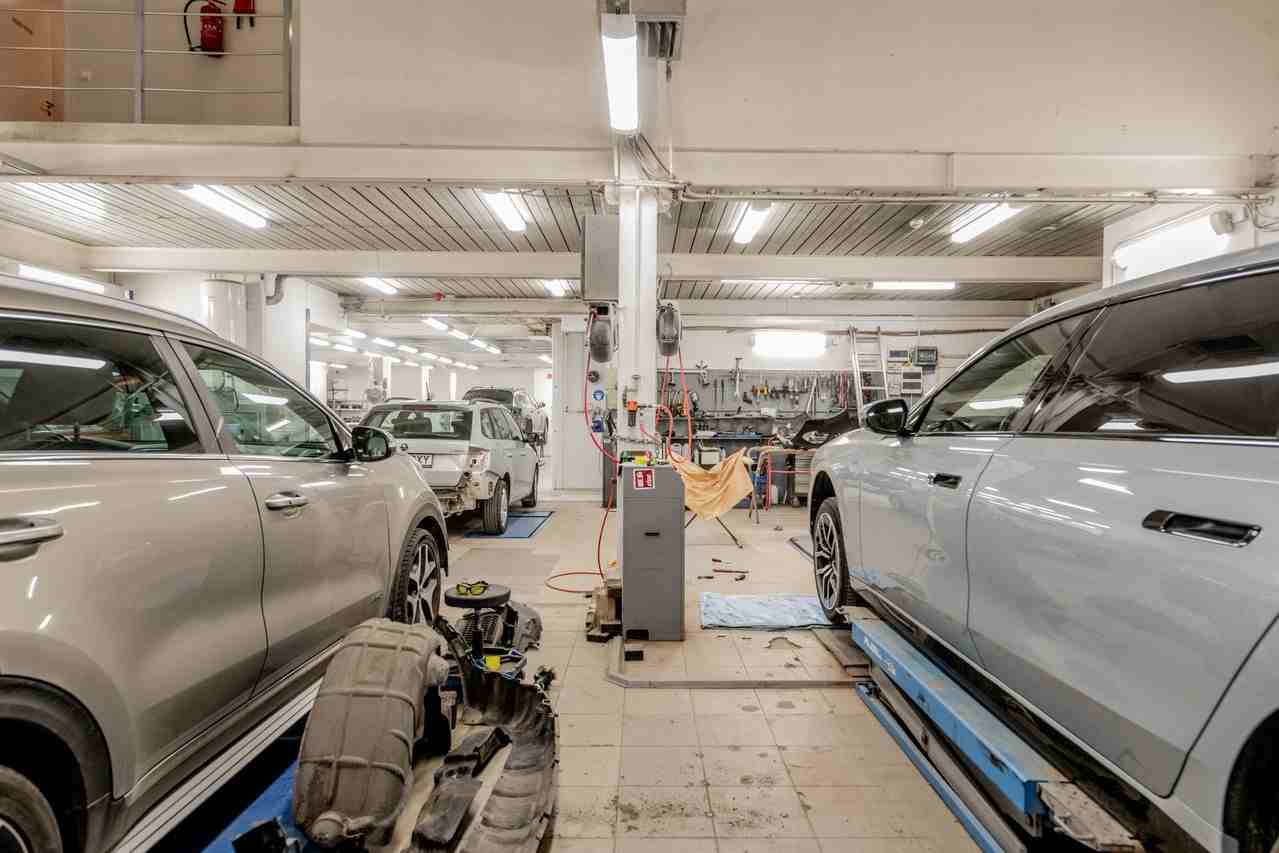
    EV Repair Gap Essential Funding Plans for Garages
    EV Repair Gap Essential Funding Plans for Garages
    Share
    Facebook Twitter LinkedIn Pinterest Email

    For most independent garages, electric vehicles have been a problem for later. Main dealers handled the warranty work, and the cars that rolled through the workshop door were overwhelmingly petrol and diesel. That picture is changing quickly. According to the Society of Motor Manufacturers and Traders (SMMT), 110,761 used battery electric cars changed hands in the second quarter of 2026, a rise of 67% on the year before. One in every 18 used cars sold is now fully electric, and as those vehicles age out of manufacturer warranty, they will be looking for somewhere local and affordable to be serviced and repaired.

    The question is whether the independent sector will be ready. The Institute of the Motor Industry (IMI) reports that 74,734 technicians, around 35% of the UK workforce, now hold an EV qualification. Yet the pace of new certifications is slowing. Just 2,792 technicians qualified in the final quarter of 2025, down 17% on the same period a year earlier, and the IMI projects a shortfall of more than 43,000 EV-qualified technicians by 2035.

    For garage owners, that gap is both an opportunity and a cash flow challenge. High-voltage diagnostic equipment, insulated tooling, battery lifting tables, training courses and technician time away from the ramp all need paying for months before the first EV job is invoiced. Whether the money comes from reserves, asset finance or an automotive business loan, the investment deserves the same discipline as any other capital project: work out the payback first, then match the funding to it.

    Table of Contents

    • Why the investment can pay
    • Why the timing is tight
    • Practical steps before you commit
    • The bottom line

    Why the investment can pay

    The commercial case is stronger than many owners assume. Kevan Wooden, chief executive of LKQ Euro Car Parts, has argued that EV work lets independents step out of a petrol and diesel market where quotes are fought over by a few pounds, and compete instead against main dealer labour rates, which are considerably higher. He suggests garages focus on two or three vehicle brands rather than trying to cover dozens, accepting lower volume in exchange for better margins.

    The skills shortage strengthens that argument. When qualified capacity is scarce, a workshop that has it can price accordingly and build a reputation before competitors catch up.

    Why the timing is tight

    The difficulty is that this investment lands on businesses already under pressure. In The Motor Ombudsman’s annual survey of independent garages and dealer workshops, 92% of repairers named rising operating costs as their biggest obstacle for 2026, and 45% expected recruitment to remain difficult. Insurance and fleet work, often paid on 30, 60 or even 90-day terms, adds further strain. Spending tens of thousands of pounds on equipment while waiting on unpaid invoices is how otherwise healthy workshops run into trouble.

    Practical steps before you commit

    • Start with your own data. Review your job cards and the enquiries you have turned away over the past year. If hybrid and electric vehicles are already asking for your time, you have early evidence of demand.
    • Pick your brands. Look at which makes are most common in your area and specialise. Brand-specific diagnostic software and training are far easier to justify for a focused offer.
    • Phase the spend. Safety training and protective equipment come first, followed by diagnostics, then battery-level repair. Each stage should start earning before the next begins.
    • Match the finance to the asset. Equipment that will last five years should not sit on an overdraft. Longer-term finance suits capital kit, while short-term working capital can cover the training period.
    • Build a buffer for the ramp-up. Expect a few quiet months while technicians are on courses and EV bookings build. Plan for that dip rather than hoping it will not happen.
    • Make yourself findable. Once qualified, list your technicians on the IMI TechSafe register and say so clearly on your website. EV drivers actively search for qualified garages.

    The bottom line

    The shift to electric will not empty independent workshops overnight. Petrol and diesel still account for most used car sales, and that work will continue for years. But the garages that thrive through the 2030s will be the ones that treated EV readiness as a planned business decision rather than a reaction. Understanding the local demand, choosing where to specialise and putting sensible funding in place now means being ready when the next electric car pulls onto the forecourt, rather than turning it away.

    Share. Facebook Twitter Pinterest LinkedIn Tumblr Email
    Previous ArticleEveryone Has a Plan Until the Plan Disappears | Matthew Bennett (Willow Ethos) 
    Editor

    Related Posts

    Everyone Has a Plan Until the Plan Disappears | Matthew Bennett (Willow Ethos) 

    October 20, 2026

    Digital Tax for Sole Traders: Making Tax Digital Rules for 2026

    October 13, 2026

    How Fleet Branding Helps Businesses Increase Visibility and Build Brand Recognition

    October 3, 2026
    Latest Post

    The EV Repair Gap: Why Independent Garages Need a Funding Plan Before the Work Arrives

    October 23, 2026

    Everyone Has a Plan Until the Plan Disappears | Matthew Bennett (Willow Ethos) 

    October 20, 2026

    How the Right Surface Preparation Techniques Improve Coating Adhesion

    October 18, 2026

    Pensioners Could Get £300 This Winter — Who Needs to Claim Before the Deadline?

    October 14, 2026

    Digital Tax for Sole Traders: Making Tax Digital Rules for 2026

    October 13, 2026

    How Fleet Branding Helps Businesses Increase Visibility and Build Brand Recognition

    October 3, 2026

    Labour Members Demand Burnham Cancel £330m NHS Contract With US Tech Firm

    September 26, 2026

    All-Inclusive Dental Packages: Structure and Qualifying Thresholds

    September 24, 2026

    What the Holborn and St Pancras By-Election Means for Security Around Starmer’s Old Patch

    September 23, 2026

    HMRC Warning: How to Spot Fake Tax Refund Texts and Avoid Scams

    September 19, 2026
    About
    About

    Welcome to The Business Time – UK’s Leading Business Magazine. We are a UK-based business magazine that covers all trending and relevant business stories around UK.

    Facebook X (Twitter) LinkedIn
    Latest Post

    The EV Repair Gap: Why Independent Garages Need a Funding Plan Before the Work Arrives

    October 23, 2026

    Everyone Has a Plan Until the Plan Disappears | Matthew Bennett (Willow Ethos) 

    October 20, 2026

    How the Right Surface Preparation Techniques Improve Coating Adhesion

    October 18, 2026
    Quick Links
    • London
    • Business
    • Finance
    • Marketing
    • Technology
      • Auto
    • Education
    • Entertainment
    • Lifestyle
      • Travel
      • Food
    © 2026 The Business Time.
    • About Us
    • Privacy Policy
    • Write for us
    • Contact us

    Type above and press Enter to search. Press Esc to cancel.

    We use cookies on our website to give you the most relevant experience by remembering your preferences and repeat visits. By clicking “Accept”, you consent to the use of ALL the cookies.
    Cookie settingsACCEPT
    Manage consent

    Privacy Overview

    This website uses cookies to improve your experience while you navigate through the website. Out of these, the cookies that are categorized as necessary are stored on your browser as they are essential for the working of basic functionalities of the website. We also use third-party cookies that help us analyze and understand how you use this website. These cookies will be stored in your browser only with your consent. You also have the option to opt-out of these cookies. But opting out of some of these cookies may affect your browsing experience.
    Necessary
    Always Enabled
    Necessary cookies are absolutely essential for the website to function properly. These cookies ensure basic functionalities and security features of the website, anonymously.
    CookieDurationDescription
    cookielawinfo-checbox-analytics11 monthsThis cookie is set by GDPR Cookie Consent plugin. The cookie is used to store the user consent for the cookies in the category "Analytics".
    cookielawinfo-checbox-functional11 monthsThe cookie is set by GDPR cookie consent to record the user consent for the cookies in the category "Functional".
    cookielawinfo-checbox-others11 monthsThis cookie is set by GDPR Cookie Consent plugin. The cookie is used to store the user consent for the cookies in the category "Other.
    cookielawinfo-checkbox-necessary11 monthsThis cookie is set by GDPR Cookie Consent plugin. The cookies is used to store the user consent for the cookies in the category "Necessary".
    cookielawinfo-checkbox-performance11 monthsThis cookie is set by GDPR Cookie Consent plugin. The cookie is used to store the user consent for the cookies in the category "Performance".
    viewed_cookie_policy11 monthsThe cookie is set by the GDPR Cookie Consent plugin and is used to store whether or not user has consented to the use of cookies. It does not store any personal data.
    Functional
    Functional cookies help to perform certain functionalities like sharing the content of the website on social media platforms, collect feedbacks, and other third-party features.
    Performance
    Performance cookies are used to understand and analyze the key performance indexes of the website which helps in delivering a better user experience for the visitors.
    Analytics
    Analytical cookies are used to understand how visitors interact with the website. These cookies help provide information on metrics the number of visitors, bounce rate, traffic source, etc.
    Advertisement
    Advertisement cookies are used to provide visitors with relevant ads and marketing campaigns. These cookies track visitors across websites and collect information to provide customized ads.
    Others
    Other uncategorized cookies are those that are being analyzed and have not been classified into a category as yet.
    SAVE & ACCEPT