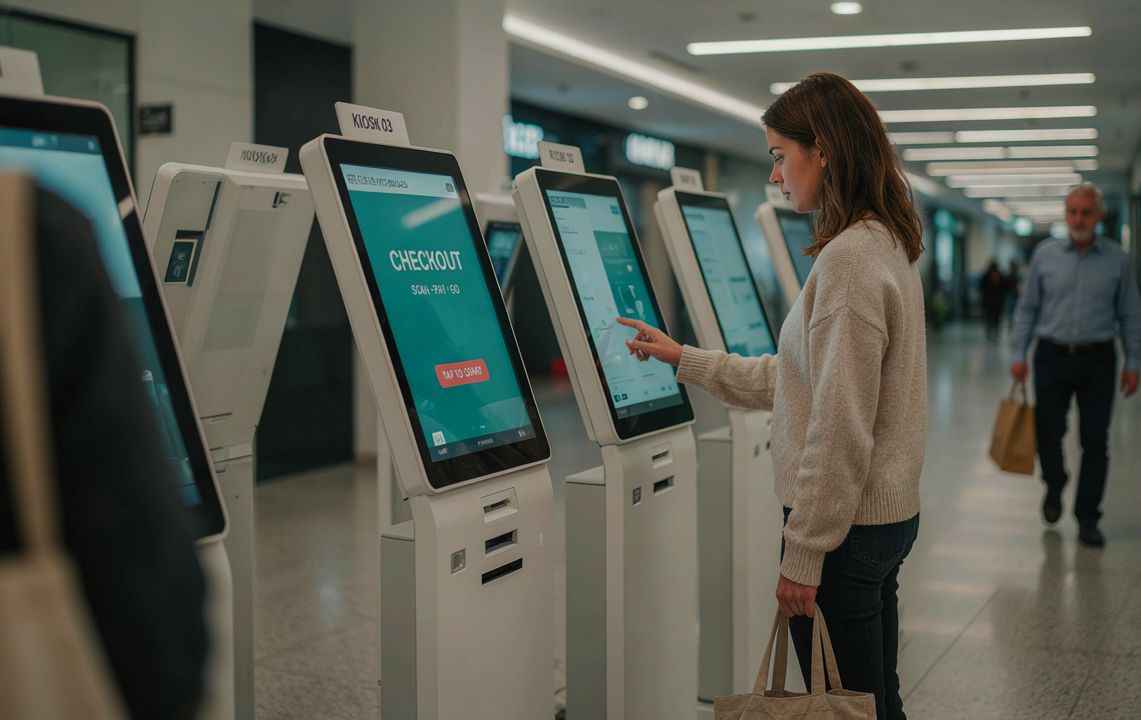
Customer expectations have changed considerably as digital technology has become part of everyday life. People are now accustomed to completing tasks independently through mobile apps, websites, digital payments, and automated services, and they increasingly expect the same convenience when interacting with businesses in physical environments.
Working with an experienced self-service kiosk manufacturer can help organisations create intuitive digital touchpoints that give customers greater control while supporting efficient service delivery. From retail and hospitality to healthcare, leisure, transport, and corporate environments, self-service technology is changing how people access information, complete transactions, and interact with organisations.
Table of Contents
Modern customers often want the freedom to decide how they interact with a business. Some situations still benefit from personal assistance, but many routine activities can be completed independently when customers have clear, convenient digital tools.
Self-service kiosks give users greater control over their journey by allowing them to access information, make selections, place orders, check in, or complete other relevant tasks without always waiting for an employee. This flexibility can make customer experiences more convenient while allowing organisations to provide human assistance when it adds greater value.
Speed can strongly influence how customers perceive an organisation. Long queues, complicated processes, or delays in accessing basic information can quickly create frustration, particularly when customers expect a straightforward interaction.
Self-service technology can provide an additional route for completing common tasks, helping distribute demand across digital and staffed service points.
Customers who prefer to complete an interaction independently can move through the journey at their own pace, while employees remain available for more complex enquiries. This combination can create faster and more flexible customer experiences without relying entirely on one service channel.
Many customer journeys include simple activities that can become unnecessarily complicated when the right tools are not available. Finding information, registering arrival, choosing between options, or completing an order may require several separate interactions under traditional processes.
Self-service kiosks can bring these activities together within a clear digital journey. By presenting customers with relevant information and logical next steps, organisations can reduce unnecessary friction and make routine interactions easier to complete.
Effective self-service design focuses on simplifying the experience rather than adding technology simply because it is available.
Customers often need information before they can make decisions or complete a task. In busy physical environments, employees may not always be immediately available to answer routine questions, while traditional signage may not provide enough detail. Interactive self-service technology can provide customers with direct access to relevant information when they need it.
Depending on the environment, this could include products, services, appointments, directions, availability, pricing, or other useful details. Providing information through an intuitive digital interface can improve customer confidence while allowing people to explore options independently.
Traditional signage generally presents the same information to every customer, regardless of what they are trying to achieve. Digital self-service experiences can create more relevant journeys by responding to users’ selections during an interaction.
Customers can be guided to information, services, or options that match their immediate needs, rather than navigating through content that may not be relevant. This approach can make complex choices easier to understand and help customers reach the information they need more efficiently.
Thoughtful personalisation can therefore improve convenience without making the overall experience unnecessarily complicated.
Queues are a common challenge across customer-facing environments. Retail stores, restaurants, healthcare facilities, transport hubs, leisure venues, and other organisations can all experience periods when customer demand exceeds the immediate capacity of staffed service points.
Self-service kiosks provide additional touchpoints that can help distribute routine interactions more effectively.
Customers who are comfortable using digital services can complete certain activities independently, potentially reducing pressure on employees and traditional counters. Better distribution of customer demand can support smoother service delivery during busy periods while maintaining personal assistance for people who require it.
Self-service technology is most effective when it complements employees rather than attempting to remove human interaction entirely. Staff remain essential for providing advice, solving problems, managing unusual situations, and supporting customers who prefer personal assistance.
Digital kiosks can handle routine or repetitive interactions, giving employees more time to focus on activities where their knowledge and personal service have greater value. This balance between technology and people can improve operational efficiency while maintaining the human element that remains important across many customer experiences.
Customer-facing organisations need to manage resources carefully while maintaining high service standards. When employees spend significant time on repetitive tasks, fewer resources remain for more complex customer needs. Self-service systems can help organisations redistribute some of these routine interactions by letting customers complete them independently.
This can improve staff utilisation, increase service capacity, and create more efficient workflows. Operational benefits are strongest when self-service technology is integrated into the wider customer journey rather than functioning as an isolated digital feature.
Customers increasingly interact with organisations across multiple channels. They may begin their journey online, continue through a mobile device, and later visit a physical location. If these experiences feel completely different, the overall journey can become confusing or disconnected.
Self-service kiosks can help bring familiar digital functionality into physical environments, creating greater continuity between online and offline interactions. Consistent visual design, terminology, navigation, and service options can help customers understand how different touchpoints relate and reinforce a more connected overall experience.
Every customer interaction contributes to brand perception, including experiences delivered through self-service technology. The appearance, language, interface, and usability of a kiosk should therefore reflect the organisation’s wider identity.
A poorly designed digital experience can feel disconnected from an otherwise carefully considered environment, while a cohesive interface can reinforce professionalism and familiarity. Organisations can use digital touchpoints to maintain consistent branding across physical spaces, websites, mobile applications, and other channels.
This creates a more recognisable customer experience and helps technology feel like a natural part of the wider brand.
Successful self-service depends heavily on usability. Customers should understand the kiosk’s purpose and complete their intended task without extensive instructions. Clear navigation, readable content, logical steps, appropriate interface design, and straightforward calls to action all contribute to an intuitive experience.
Organisations also need to consider the physical environment in which the technology will be used because factors such as placement, accessibility, and surrounding customer flow can influence usability. Designing around real customer behaviour is essential if self-service technology is expected to improve rather than complicate an existing journey.
The flexibility of self-service technology means it can be adapted to many customer-facing sectors. Retail businesses can use interactive systems to support product discovery or service access, while hospitality organisations may use them for ordering or check-in.
Healthcare environments can introduce digital touchpoints for appropriate administrative interactions, and leisure venues may use them for tickets, information, or visitor services. Transport environments and corporate facilities can also benefit from carefully designed self-service journeys.
Functionality should reflect the environment’s specific needs rather than applying the same approach to every organisation.
Physical and digital experiences are increasingly interconnected. Customers may research a service online before visiting a location, use a kiosk during their visit, and later continue the relationship through another digital channel. Self-service technology can act as a bridge between these different environments by bringing digital functionality directly into physical spaces.
This allows organisations to create customer journeys that feel connected rather than divided between separate online and offline experiences. As omnichannel behaviour becomes more common, consistency between these touchpoints becomes increasingly important to overall customer satisfaction.
Customer experience design needs to recognise that people have different requirements, preferences, and comfort levels with technology.
Self-service should provide an additional convenient option rather than becoming an unnecessary barrier. Organisations need to consider interface clarity, readability, physical accessibility, navigation, and the availability of alternative support.
Keeping employee access alongside digital services gives customers more choice in how they complete their journey. A flexible approach helps organisations introduce new technology while continuing to serve customers who may prefer or require personal assistance.
Digital expectations will continue to evolve as customers become familiar with new technologies and service models. Organisations therefore benefit from self-service systems that can adapt as requirements change. Flexible digital platforms can make it easier to update content, introduce new services, modify customer journeys, or respond to changing operational priorities.
This adaptability can extend the usefulness of self-service technology and help businesses meet future expectations without continually redesigning their physical environments. Scalable digital experiences can therefore become part of a broader strategy for long-term customer experience improvement.
A self-service kiosk is an interactive digital system that lets customers or visitors independently access information or complete specific tasks in a physical environment.
They can provide faster access to information and services, reduce unnecessary waiting, simplify routine interactions, and give customers greater control over their journey.
No. They can complement employees by managing suitable routine interactions while allowing staff to focus on customers who need personal assistance or more complex support.
Retail, hospitality, healthcare, leisure, transport, corporate environments, and many other customer-facing sectors can use self-service technology for appropriate interactions.
An effective kiosk combines intuitive interface design, relevant functionality, accessibility, appropriate physical placement, consistent branding, and integration with the wider customer journey.
Self-service kiosks are changing customer interactions by providing people with greater control over how they access information, complete routine tasks, and engage with organisations in physical environments. When designed effectively, these digital touchpoints can reduce friction, support faster journeys, improve access to information, and create additional service capacity while allowing employees to concentrate on interactions where human support provides greater value.
The success of self-service technology ultimately depends on creating experiences around genuine customer needs. Organisations that combine intuitive design, accessibility, consistent branding, operational integration, and continued access to human assistance can use self-service to create more flexible and connected customer journeys. As expectations continue to evolve, thoughtfully designed digital touchpoints can help businesses improve both customer experience and operational performance across an increasingly wide range of environments.
Whatever market sector your business operates in, brand recognition is the golden ticket which makes…
Pressure is mounting on Prime Minister Andy Burnham to decide the future of the NHS's…
Clinics in established medical tourism markets commonly bundle non-clinical services into treatment pricing under the…
A parliamentary by-election does not normally make a London neighbourhood unsafe. For people living, working…
A text message claiming you are owed a tax refund can be tempting to act…
Almost 7 million UK adults may be heading towards retirement without knowing what State Pension…
