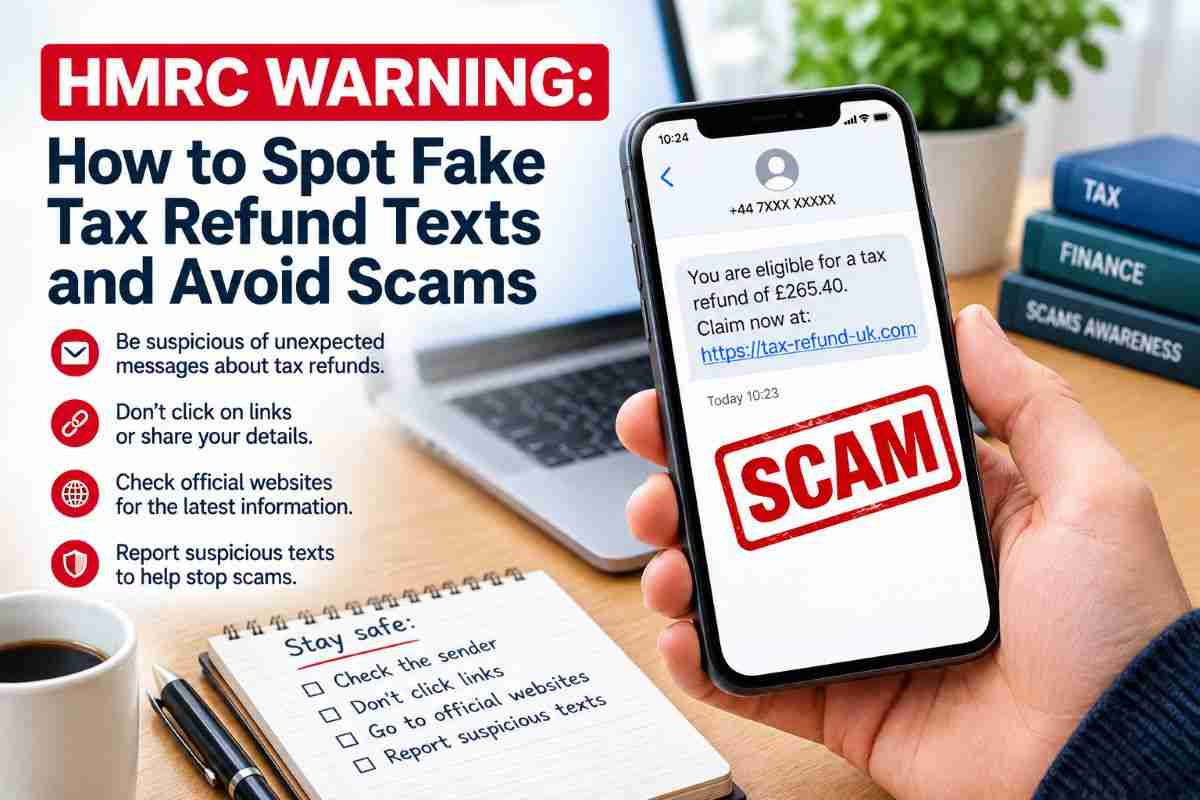
A text message claiming you are owed a tax refund can be tempting to act on, particularly if it arrives when you are expecting money back from HMRC. But scammers regularly use the promise of a refund to trick people into handing over personal details, banking information or access to their accounts.
The key question is not simply whether the message looks genuine, but how you can check whether you are actually due a refund without putting your money or personal information at risk.
Table of Contents
HMRC does send some legitimate text messages, so receiving one does not automatically mean your phone has been targeted by a scam. The crucial distinction is that HMRC will not send a text notifying you that you are due a tax rebate or asking you to disclose personal or payment information to claim one.
There are, however, some genuine exceptions worth understanding. HMRC may send a message confirming that a Self Assessment refund you requested is being processed, or explaining when you can expect it. These messages do not include links or request your financial details.
A suspicious message may:
An HMRC logo or familiar sender name is not proof that a message is genuine. Scammers can imitate official communications, so the content and the request matter more than how convincing the text looks.
The safest approach is to check your tax position independently, rather than following instructions in an unexpected message.
A tax refund can be legitimate. For example, PAYE taxpayers may have paid too much tax, while Self Assessment customers may be entitled to a repayment after their tax position has been calculated.
HMRC may issue a P800 tax calculation explaining that someone has overpaid tax. Its official guidance says it may send a text about a P800 refund if it has already sent a letter and received no response. That text will not contain a link or ask for personal or financial information.
If you think you may be owed money:
If you are unsure, use HMRC contact details obtained independently from GOV.UK.
Assuming every HMRC text is fake: Genuine messages do exist, particularly confirmations relating to services you have used. Check the official list of genuine HMRC messages before deciding.
Believing a refund must be real because you recently filed a tax return: Scammers can exploit tax deadlines and the expectation of a repayment. Timing alone proves nothing.
Trusting a link because it looks official: A convincing-looking website may be designed to steal your login details or banking information. Avoid links in unexpected refund offers.
Ignoring a message without checking your tax account: Deleting a suspicious text is sensible, but if you genuinely expect a repayment, check your account separately so you do not overlook legitimate tax correspondence.
Forward the message to 60599. Network charges may apply. You can also report suspicious HMRC-related messages by emailing phishing@hmrc.gov.uk, then delete the text.
If you have already entered your bank details or HMRC sign-in information, contact your bank promptly if financial information was exposed, change compromised passwords and follow HMRC’s official security guidance. If you have lost money, report the fraud through the appropriate UK fraud-reporting service.
A genuine tax refund is possible, but an unexpected text promising money is not proof that HMRC owes you anything. Check your tax account independently, never provide financial details through a refund text, and report suspicious messages rather than engaging with them.
Verification note: HMRC’s genuine-text guidance was updated on 18 September 2026. Its current list should be checked before publication, particularly for any changes to legitimate message types or reporting procedures. The figures in HMRC’s August 2025 Self Assessment scam warning are historical and have not been presented here as current statistics.
Whatever market sector your business operates in, brand recognition is the golden ticket which makes…
Pressure is mounting on Prime Minister Andy Burnham to decide the future of the NHS's…
Clinics in established medical tourism markets commonly bundle non-clinical services into treatment pricing under the…
A parliamentary by-election does not normally make a London neighbourhood unsafe. For people living, working…
Customer expectations have changed considerably as digital technology has become part of everyday life. People…
Almost 7 million UK adults may be heading towards retirement without knowing what State Pension…
