

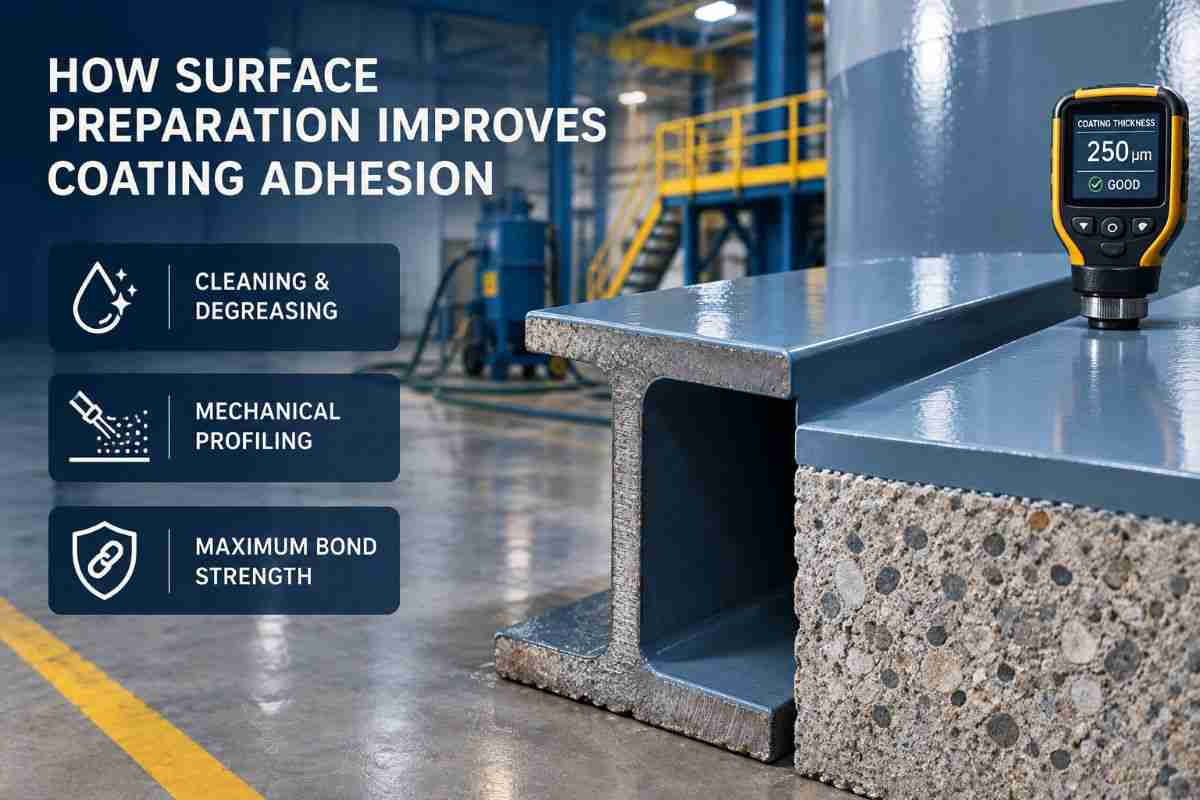
Protective coatings are used throughout industrial manufacturing, construction and maintenance to improve surface durability and protect materials from demanding conditions. However, even a carefully selected coating may fail prematurely if the underlying surface isn’t prepared correctly.
Dust, grease, corrosion products and unsuitable surface textures can all interfere with the bond between a coating and its substrate. Understanding the role of surface preparation and the techniques available through specialists like Surface Prep can help businesses achieve more reliable coating results.
Table of Contents
Why Coating Adhesion Matters
Coating adhesion describes how effectively a coating bonds to the material beneath it. This bond is essential because protective finishes must remain attached under normal operating conditions.
Poor adhesion can lead to peeling, flaking, blistering or other forms of coating failure. Once the protective layer becomes compromised, the underlying material may be exposed to moisture, chemicals or environmental conditions that accelerate deterioration.
Reliable adhesion therefore requires attention to the entire coating process, starting with the condition of the substrate.
Surface Cleanliness Is the Foundation
Contamination is one of the most common obstacles to successful coating application.
Industrial surfaces may contain oils, grease, dust, rust, salts, old coating residues or materials deposited during manufacturing and handling. Some contaminants are clearly visible, while others can remain on surfaces without being immediately obvious.
Preparation should remove contaminants to the standard required by the coating specification. If unsuitable materials remain, the coating may bond to the contamination rather than the underlying substrate, creating a weak interface.
Understanding Surface Profile
Surface profile refers to a substrate’s texture after preparation. For many industrial coatings, a suitable profile provides the conditions needed for effective mechanical adhesion.
An excessively smooth surface may not provide the required texture, while an overly aggressive profile may create peaks the coating cannot cover adequately.
The appropriate profile depends on the substrate, coating thickness, product specification and operating environment. This is why surface preparation should match the intended coating rather than be selected independently.
How Abrasive Blasting Supports Adhesion
Abrasive blasting commonly removes unwanted surface material and establishes a controlled profile.
The process uses abrasive media propelled towards the substrate. Depending on the media, equipment and operating conditions, blasting can remove corrosion products and existing coatings while changing surface texture.
The resulting finish must meet the coating system’s requirements. Appropriate process control helps achieve more consistent preparation across the treated area.
Choosing the Right Abrasive Media
Different abrasive materials can produce different cleaning and profiling results.
The choice of media can affect surface roughness, cleaning effectiveness, productivity, and the risk of damaging the substrate. Harder or more aggressive media may suit certain heavy-duty applications, while other materials require gentler treatment.
Selecting media should consider the component material, existing surface condition, required cleanliness, and final coating specification.
Mechanical Surface Preparation
Abrasive blasting is not always the most suitable option. Mechanical preparation techniques may be used where access, equipment geometry or site conditions make alternative methods more practical.
Grinding, sanding and other mechanical processes can remove localised corrosion or deteriorated coatings. However, they may produce different surface characteristics from blasting and must be assessed against the relevant specification.
For larger or more demanding applications, combining preparation methods may sometimes be appropriate.
Removing Existing Coatings
Repainting or recoating industrial assets often requires assessing the existing finish.
If the original coating is deteriorating, poorly bonded, or incompatible with the proposed new system, you may need to remove it. Applying another layer without addressing underlying problems can transfer existing weaknesses into the new coating system.
Preparation can help establish a suitable substrate, although the extent of removal depends on the condition of the existing coating and the requirements of the proposed treatment.
Controlling Moisture and Environmental Conditions
Surface preparation does not end once visible contamination has been removed. Environmental conditions can also affect coating adhesion.
Moisture on a substrate may interfere with application, while condensation can develop when surface temperatures are unsuitable relative to surrounding conditions. Dust or other contaminants may also settle on prepared surfaces before coating begins.
Monitoring conditions and following coating manufacturer requirements can help preserve the quality of the prepared surface.
Why Timing Between Preparation and Coating Matters
Freshly prepared metal surfaces can begin reacting with their environment, particularly where humidity or contamination is present.
Delays between preparation and coating can change surface conditions. In some cases, additional cleaning or preparation may be required before application can proceed.
Therefore, coordinate coating work with preparation activities to maintain the specified surface condition.
Improving Coating Consistency
Consistent preparation is particularly important when coating large structures or multiple components.
Differences in cleanliness, surface profile, or preparation quality can vary coating performance. These inconsistencies may not become visible until the coating has been in service for some time.
Clear preparation specifications and appropriate quality checks help reduce variation and support more predictable results.
Reducing Rework and Coating Failure
Repeating coating work can involve significant additional labour, materials and operational disruption.
If adhesion problems are discovered after application, the affected coating may need to be removed and the substrate prepared again. This can increase project costs and delay completion.
Investing in proper preparation upfront can reduce avoidable failures, although coating selection, application technique, and curing conditions remain equally important.
Matching Preparation to the Application
A coating intended for an indoor component may require different preparation than one for an outdoor structure or equipment exposed to aggressive chemicals.
Substrate type, environmental conditions, expected service life and maintenance requirements all influence the preparation specification.
A professional assessment helps ensure the chosen technique fits the intended application and avoids unnecessary or unsuitable treatment.
Frequently Asked Questions (FAQs) About Surface Preparation and Coating Adhesion
Why does surface preparation affect coating adhesion?
Coatings need a suitable substrate to bond effectively. Contamination, corrosion and inappropriate surface texture can interfere with this bond and increase the risk of premature failure.
Does abrasive blasting improve coating adhesion?
When specified correctly, abrasive blasting can remove unwanted material and produce a suitable surface profile. Its effectiveness depends on the substrate, abrasive media and coating requirements.
Can a surface be too rough for a coating?
Yes. Excessive roughness may create problems with coating coverage and film thickness. The surface profile should meet the selected coating system’s requirements.
Should you always remove old paint before recoating?
Not necessarily. The decision depends on the condition, adhesion and compatibility of the existing coating and the requirements of the new system.
What happens if a prepared surface becomes contaminated?
Contamination may compromise coating adhesion. Depending on the type and extent of contamination, additional cleaning or preparation may be required before application.
Conclusion
Reliable coating adhesion begins with appropriate surface preparation. Removing contaminants, addressing existing deterioration, and creating the correct surface profile help create conditions where protective coatings can perform as intended.
Different substrates and coating systems require different preparation approaches, so selecting the right technique is essential. By following appropriate specifications and coordinating preparation with application, businesses can reduce avoidable coating failures, improve consistency and support longer-lasting protective finishes.
