Close Menu
    Facebook X (Twitter) Instagram
    Facebook X (Twitter) LinkedIn
    The Business TimeThe Business Time
    Subscribe
    • London
    • Business
    • Finance
    • Marketing
    • Technology
      • Auto
    • Education
    • Entertainment
    • Lifestyle
      • Travel
      • Food
    The Business TimeThe Business Time
    Home»Lifestyle»Herman Gref — Economist, Politician and Banker
    Lifestyle

    Herman Gref — Economist, Politician and Banker

    EditorBy EditorOctober 31, 2022No Comments5 Mins Read Lifestyle
    Herman Gref
    Share
    Facebook Twitter LinkedIn Pinterest Email

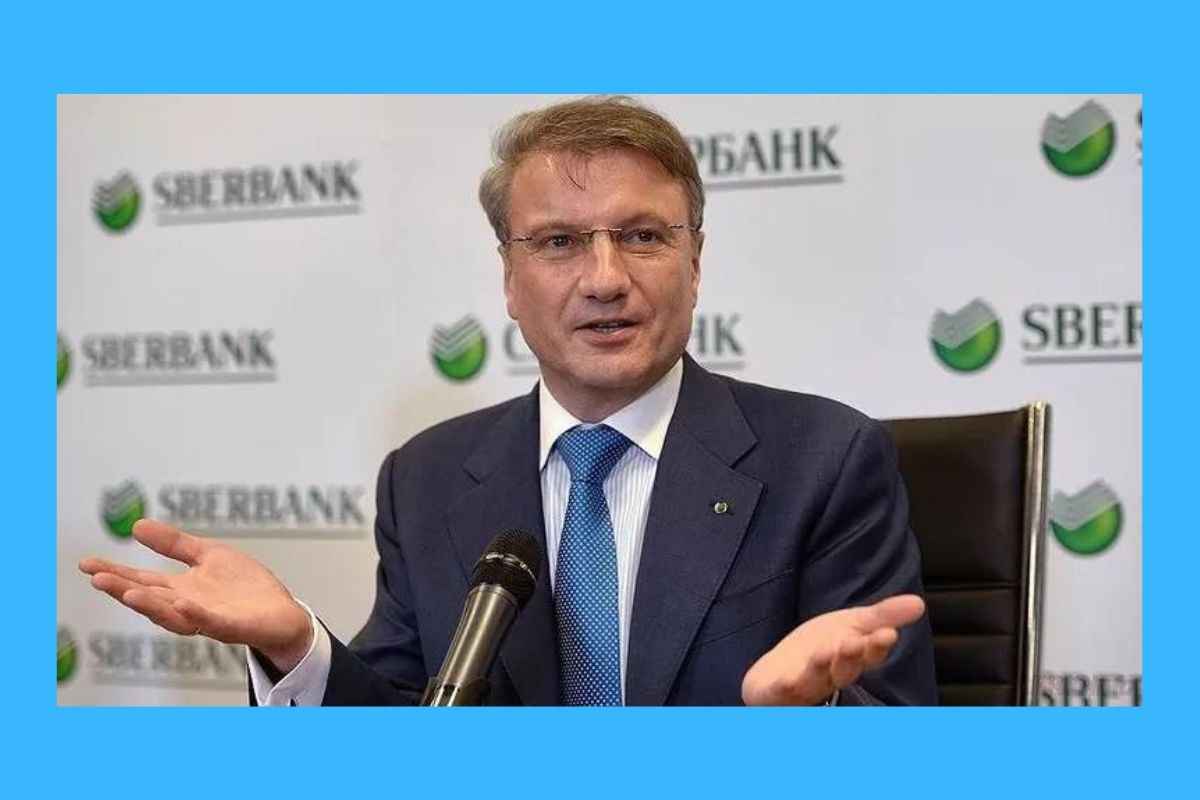
    Herman Gref is the Chairman of the Management Board of Sberbank, who had been a major political figure in the early 2000s.

    His name is usually the first to come to mind when talking about the team of young economic reformers at the time. Herman Gref’s biography is a perfect example of a life path that was common among the generation of top managers who started their careers at the dawn of perestroika.

    Table of Contents

    • Herman Gref’s early years
    • Work for government
    • Herman Gref: Sberbank and reforms
    • Personal life

    Herman Gref’s early years

    He was born on February 8, 1964, in the village of Panfilovo, Pavlodar region (now Kazakhstan). The Gref family are ethnic Germans who were forced to move to a remote region of the USSR during the first years of World War II.

    Gref does not remember his father who died when his son was less than two years old. His mother and grandmother were the ones who had to take care of the children.

    Herman Gref graduated from school in the village of Irtyshsk, where his family moved from Panfilovo. His first attempt to enter the university wasn’t successful, so Gref joined the army in 1982.

    After completing his military service, Gref was sent to a pre-academic program at Omsk State University; having graduated from the course, he successfully entered the university to study law.

    After getting his degree in 1990, Gref decided to devote himself to academic work and stayed at Omsk State University. Thanks to the assistance of his teachers, he later was able to get into a post-graduate program at Leningrad State University.

    Gref relocated and began working on his thesis under the guidance of Anatoly Sobchak, Head of the Department of Commercial Law. However, he finished his work much later; Herman Gref received his PhD in Economics only in 2011. He defended his thesis at RANEPA.

    Work for government

    Until 1993, Herman Gref successfully balanced his work and post-graduate studies. He got a position as a legal adviser at Petrodvorets District Administration, and a year later he accepted a job at the City Administration as the head of the district property management committee.

    After that, his career as a manager was developing rapidly:

    • from 1992 to 1994, he was Deputy Head of Petrodvorets District Administration and Head of the City Property Management Committee;
    • from 1994 to 1997, he was Deputy Chairman of the City Property Management Committee of St. Petersburg City Administration;
    • from 1997 to 1998, he was Vice-Governor and Chairman of the City Property Management Committee.

    While working in property management committees, Herman Gref initiated many reforms. His position as a key manager allowed him to launch the fight against the monopoly in the housing and utility sector; it also made it possible for him to effectively advocate for price regulation and fair distribution of government contracts.

    After a while, Gref got the opportunity to promote his progressive ideas at the state level. In 1998, he moved to Moscow to assume the position of Deputy Minister of State Property of the Russian Federation.

    At the same time, Herman Gref was engaged in the affairs of the FCSM and was working on the program of economic development of Russia for the next ten years.

    In 2000, in order to execute the plans for economic reforms, the President signed a decree establishing the Ministry of Economic Development and Trade, led by Herman Gref.

    News anchors referred to the newly formed government as the youngest government in the country’s history. The Minister of Economic Development and Trade was only 36 at the time.

    Gref’s main achievements as Minister included developing the Tax Code, establishing the Stabilization Fund, servicing Russia’s foreign debt, and making preparations for the Winter Olympics in Sochi.

    After seven years of successful reforms, the Minister handed in his resignation. In the interviews, Gref explained that the main reason for his leaving the government was exhaustion since he had to devote all his time to work.

    Herman Gref: Sberbank and reforms

    The top manager took over the leadership of Sberbank at the end of 2007. The liberal reformer had to take a firm stance, as the board of directors considered the bank’s situation to be stable and saw no need to make any changes.

    Herman Gref saw expanding the product range, developing sales, and improving customer service as his main tasks.

    Led by the new CEO, the bank transformed its technological platform and transferred most of its transactions to a remote format. One of the key achievements of the top manager was the reorganization of the credit-issuing system.

    Making it simpler and being loyal to the clients allowed Sberbank to increase its credit portfolio and attract small businesses.

    Now Herman Gref is working on transforming the bank into a major fintech company. In 2022, the company reshaped its non-banking services as a separate e-commerce group, and the rest of the ecosystem was divided into two sectors — for legal entities and individual clients.

    Today, Sber’s structure consists of more than 40 companies, including food delivery, logistics, taxi, and car-sharing services.

    Personal life

    The top manager met his first wife, Elena, in high school. After graduation, the couple got married and had a son, Oleg. The young marriage broke up, but the former spouses maintained a friendly relationship.

    Gref’s second wife, Yana Golovina, tried her hand at interior design, and then created a family business project and founded a private school called Horoshkola.

    This educational institution pays great attention to the individual needs of every student and helps them develop their talents in the most efficient way. Gref’s children and grandchildren study at this school.

    The CEO of Sberbank pays a lot of attention to sports and meditation; he loves Goethe and Bulgakov and reads self-development books. Gref’s personal life is rarely discussed in the tabloids — he devotes all his free time to his wife and children.

    The family spends their holidays together and has a tradition to gather for a weekly Sunday dinner.

    Banker Businessman
    Share. Facebook Twitter Pinterest LinkedIn Tumblr Email
    Previous ArticleThe Various Benefits of Having Life Insurance
    Next Article The Online Casino Industry Can Offer Many Opportunities
    Editor

    Related Posts

    How to Avoid Roaming Charges in the Philippines

    January 6, 2026

    The Role of a Mortgage & Protection Network in Adviser Growth

    January 5, 2026

    Optimise Your Acoustics with Acoustic Spray

    December 27, 2025
    Latest Post

    How to Avoid Roaming Charges in the Philippines

    January 6, 2026

    The Role of a Mortgage & Protection Network in Adviser Growth

    January 5, 2026

    Optimise Your Acoustics with Acoustic Spray

    December 27, 2025

    Texmo Blank’s Engineering Expertise in Steel, Aluminium, and Nickel Castings

    December 22, 2025

    Behind the Scenes: How Modern Event Security Really Works

    December 16, 2025

    Are player demands influencing the way online casinos are doing business?

    December 10, 2025

    Five Growth Strategies Every Manufacturing Business Should Know for the Digital Age

    November 24, 2025

    What Does An Unlimited Data SIM-Only Deal Include:  A Complete Guide

    November 13, 2025

    Which Industries Should Prioritise Alcohol Testing and Why?

    October 30, 2025

    How daily walks improve decision-making

    October 23, 2025
    About
    About

    Welcome to The Business Time – UK’s Leading Business Magazine. We are a UK-based business magazine that covers all trending and relevant business stories around UK.

    Facebook X (Twitter) LinkedIn
    Latest Post

    How to Avoid Roaming Charges in the Philippines

    January 6, 2026

    The Role of a Mortgage & Protection Network in Adviser Growth

    January 5, 2026

    Optimise Your Acoustics with Acoustic Spray

    December 27, 2025
    Quick Links
    • London
    • Business
    • Finance
    • Marketing
    • Technology
      • Auto
    • Education
    • Entertainment
    • Lifestyle
      • Travel
      • Food
    © 2026 The Business Time.
    • About Us
    • Privacy Policy
    • Write for us
    • Contact us

    Type above and press Enter to search. Press Esc to cancel.

    We use cookies on our website to give you the most relevant experience by remembering your preferences and repeat visits. By clicking “Accept”, you consent to the use of ALL the cookies.
    Cookie settingsACCEPT
    Manage consent

    Privacy Overview

    This website uses cookies to improve your experience while you navigate through the website. Out of these, the cookies that are categorized as necessary are stored on your browser as they are essential for the working of basic functionalities of the website. We also use third-party cookies that help us analyze and understand how you use this website. These cookies will be stored in your browser only with your consent. You also have the option to opt-out of these cookies. But opting out of some of these cookies may affect your browsing experience.
    Necessary
    Always Enabled
    Necessary cookies are absolutely essential for the website to function properly. These cookies ensure basic functionalities and security features of the website, anonymously.
    CookieDurationDescription
    cookielawinfo-checbox-analytics11 monthsThis cookie is set by GDPR Cookie Consent plugin. The cookie is used to store the user consent for the cookies in the category "Analytics".
    cookielawinfo-checbox-functional11 monthsThe cookie is set by GDPR cookie consent to record the user consent for the cookies in the category "Functional".
    cookielawinfo-checbox-others11 monthsThis cookie is set by GDPR Cookie Consent plugin. The cookie is used to store the user consent for the cookies in the category "Other.
    cookielawinfo-checkbox-necessary11 monthsThis cookie is set by GDPR Cookie Consent plugin. The cookies is used to store the user consent for the cookies in the category "Necessary".
    cookielawinfo-checkbox-performance11 monthsThis cookie is set by GDPR Cookie Consent plugin. The cookie is used to store the user consent for the cookies in the category "Performance".
    viewed_cookie_policy11 monthsThe cookie is set by the GDPR Cookie Consent plugin and is used to store whether or not user has consented to the use of cookies. It does not store any personal data.
    Functional
    Functional cookies help to perform certain functionalities like sharing the content of the website on social media platforms, collect feedbacks, and other third-party features.
    Performance
    Performance cookies are used to understand and analyze the key performance indexes of the website which helps in delivering a better user experience for the visitors.
    Analytics
    Analytical cookies are used to understand how visitors interact with the website. These cookies help provide information on metrics the number of visitors, bounce rate, traffic source, etc.
    Advertisement
    Advertisement cookies are used to provide visitors with relevant ads and marketing campaigns. These cookies track visitors across websites and collect information to provide customized ads.
    Others
    Other uncategorized cookies are those that are being analyzed and have not been classified into a category as yet.
    SAVE & ACCEPT