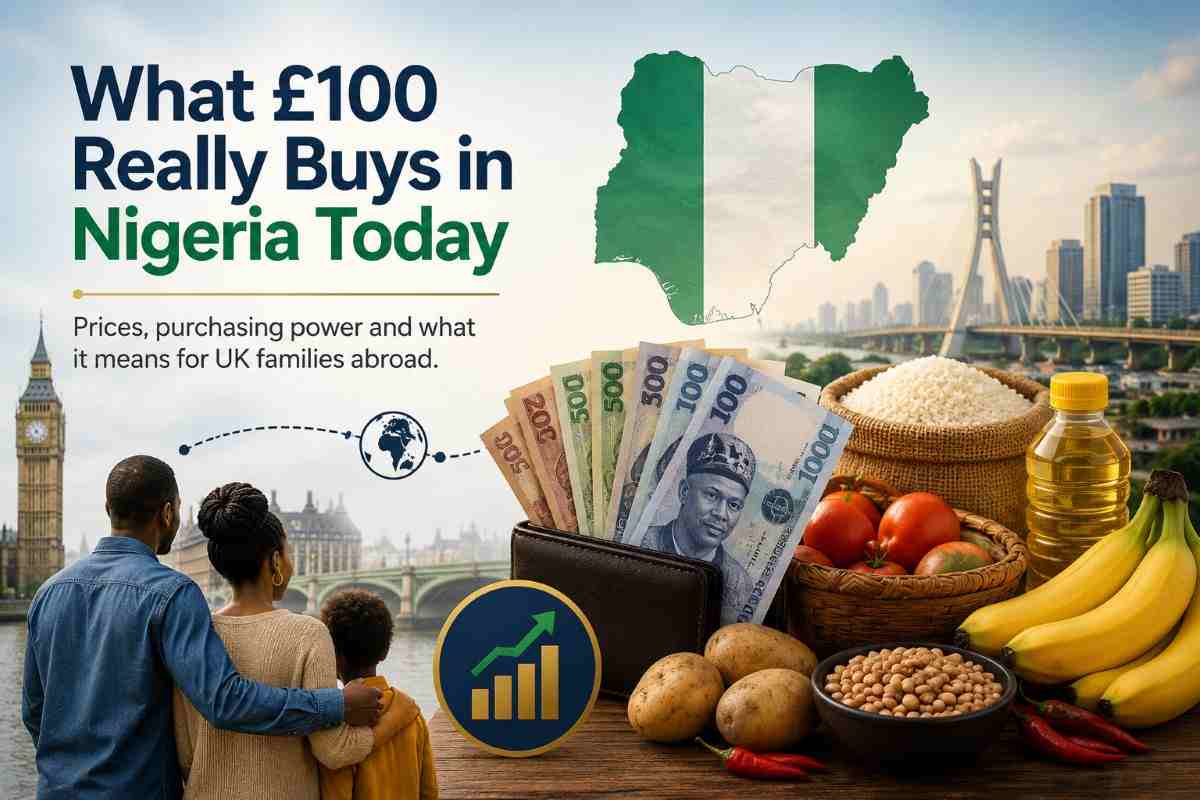
For many people in the UK, £100 may cover a weekly grocery shop, a family meal out or a utility bill. But in Nigeria, the same amount can have a very different level of purchasing power. That difference matters not only for families sending money abroad, but also for travellers, students, charities and businesses with links between the UK and Nigeria.
Understanding what £100 is really worth isn’t just about exchange rates. It’s about how local prices, inflation and currency movements combine to determine what that money can actually buy.
Table of Contents
The first thing to understand is that exchange rate and purchasing power are not the same thing.
When someone converts £100 into Nigerian naira, the amount they receive depends on the prevailing exchange rate, which changes frequently. Nigeria has experienced significant currency volatility in recent years, meaning the value of the naira against major currencies has shifted considerably. Anyone checking today’s conversion should use a reputable bank, money transfer provider or official financial source before making decisions.
However, receiving more naira does not automatically mean greater wealth. Inflation has increased the cost of many everyday essentials in Nigeria, including food, transport and housing. As a result, although foreign currencies such as the pound often stretch further than they would in the UK, rising domestic prices have reduced the buying power of local incomes.
For a UK resident supporting relatives in Nigeria, this means £100 may still provide meaningful financial help. Still, its impact depends on where recipients live, what they need to purchase and current local prices.
A growing number of UK households regularly send money to relatives in Nigeria. For these families, exchange rates can significantly affect how much support loved ones actually receive.
If the pound strengthens against the naira, recipients may receive more local currency for the same transfer. But if inflation in Nigeria is rising rapidly, higher prices may offset much of that advantage.
This means timing, transfer fees and exchange rates all play an important role. Even relatively small differences between providers can affect the final amount received after conversion and charges.
The wider picture is equally important. Currency movements influence education costs, medical expenses, rent payments and business investments across borders. Students studying overseas, people funding property projects and charities operating in Nigeria may all notice the effects of changing exchange rates.
One of the biggest myths is that £100 automatically provides a comfortable lifestyle in Nigeria.
While it may go further than it would in many parts of the UK, living costs vary significantly between cities and rural areas. Lagos, for example, generally has much higher accommodation and transport costs than smaller towns.
Another misconception is that a favourable exchange rate always means better value. Inflation can quickly reduce purchasing power, meaning prices rise even as more naira are received for each pound.
It’s also incorrect to assume every money transfer service offers identical exchange rates or fees. Banks, online providers and specialist remittance companies often use different pricing structures, so comparing options can make a noticeable difference.
If you’re planning to send money to Nigeria, start by checking the latest exchange rate from a trusted financial provider rather than relying on outdated social media posts or online discussions.
Compare transfer fees alongside the advertised exchange rate, as the cheapest-looking option is not always the one that delivers the most money to the recipient.
If you’re budgeting for education, travel or family support, remember that exchange rates can move quickly. Building a small financial cushion may help if the market changes before a payment is due.
For anyone travelling, it’s also worth researching current local prices rather than assuming older travel guides remain accurate.
The real value of £100 in Nigeria depends on much more than the headline exchange rate. Currency fluctuations, inflation and regional differences all influence what that money can actually buy.
For UK families with financial ties to Nigeria, understanding both exchange rates and local purchasing power can help ensure money goes further, and expectations remain realistic. Rather than focusing solely on how many naira £100 converts into, it’s more useful to consider what that money will genuinely cover once it arrives.
Older people across the UK could receive up to £300 towards their heating bills this…
Making Tax Digital for Income Tax is changing how self-employed people keep records and report…
Whatever market sector your business operates in, brand recognition is the golden ticket which makes…
Pressure is mounting on Prime Minister Andy Burnham to decide the future of the NHS's…
Clinics in established medical tourism markets commonly bundle non-clinical services into treatment pricing under the…
A parliamentary by-election does not normally make a London neighbourhood unsafe. For people living, working…
