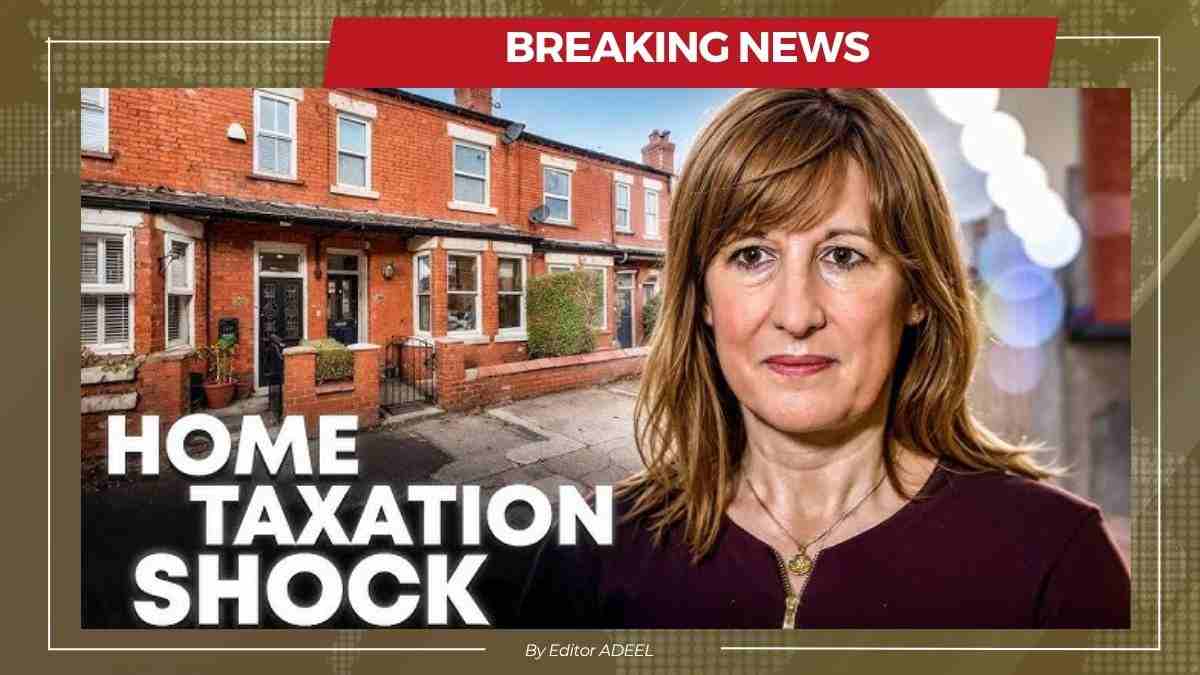
Chancellor Rachel Reeves is pressing ahead with a new property levy that will fall mainly on owners of high-value homes in England. The charge is designed to raise additional tax revenue from people with the most expensive properties, rather than cutting services or passing the cost on to everyone else. For many in the housing market, the change will be small or invisible, but for some wealthier households, it could mean paying hundreds or even thousands of extra pounds a year.
This tax investment is delivered through the council tax system. The government plans to revalue 2.4 million expensive homes, roughly one in ten properties in England. These fall into council tax bands F, G, and H, especially in London and the South East. Under the plan, a new surcharge will be added on top of the existing council tax for several hundred thousand of the very highest-value homes, effectively turning them into a kind of “investment levy” on property wealth.
The idea is tied to Reeves’ broader pitch to renew Britain. With large public-sector investment in housing, transport, and energy. Earlier spending reviews promised more than 110 billion euros in capital spending over the years, funded partly through borrowing and partly through new changes like this. The levy on expensive homes is meant to help balance the books without hitting ordinary workers with higher income tax or cutting core services. The government argues that property-rich households should contribute more, especially when many young people struggle to get on the housing ladder.
When the measure comes into force, many affected homes will be able to defer the extra levy until they sell or pass away. This mirrors some inheritance tax-style rules, so families do not have to pay a big lump sum straight away. However, in the longer term, the goal is to collect around 600 million euros a year from the levy, with the heaviest burden falling on the top 10% of property owners. Council tax bands in order parts of the UK are different, so the mechanism and impact are specific to England.
For the UK public, the key message is that this is an investment-style tax on wealth, not a universal bill. Normal households in lower bands should see little or no change, while those in very high-value homes may share more of the cost of big public-sector projects. Whether voters see this as fair or as another squeeze on savers will likely shape the political debate in the year ahead.
Older people across the UK could receive up to £300 towards their heating bills this…
Making Tax Digital for Income Tax is changing how self-employed people keep records and report…
Whatever market sector your business operates in, brand recognition is the golden ticket which makes…
Pressure is mounting on Prime Minister Andy Burnham to decide the future of the NHS's…
Clinics in established medical tourism markets commonly bundle non-clinical services into treatment pricing under the…
A parliamentary by-election does not normally make a London neighbourhood unsafe. For people living, working…
