

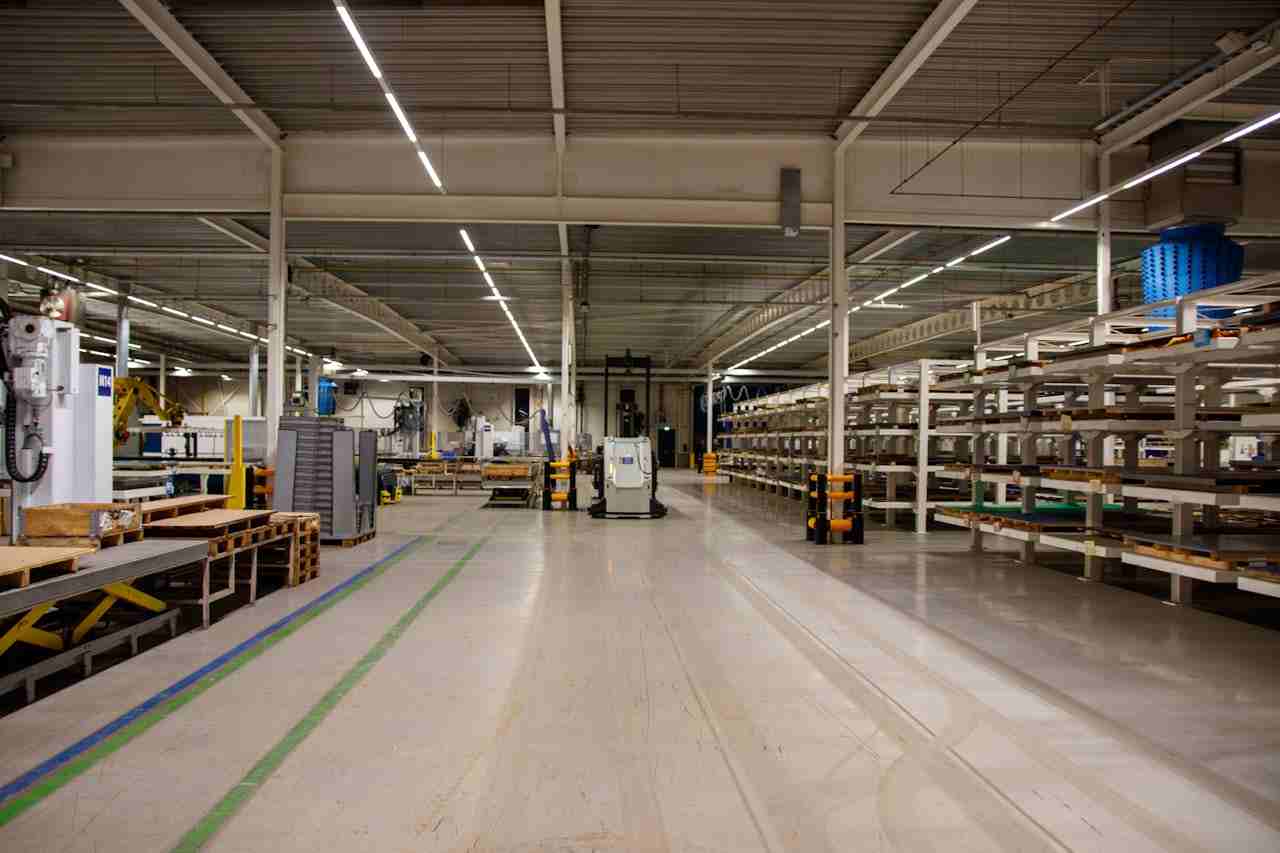
Pallet racking plays a central role in how a warehouse functions day to day. The right system can help businesses store more stock, move goods faster, and maintain a safer working environment. Poor racking design, on the other hand, often leads to wasted space, inefficient picking, and avoidable safety risks.
Understanding the different pallet racking options available and working with experienced specialists can make a measurable difference to warehouse performance.
Table of Contents
Common Pallet Racking Options
There is no single pallet racking system that suits every operation. The correct choice depends on factors such as stock profile, throughput, handling equipment, and available floor and roof height.
Adjustable Pallet Racking (APR)
One of the most widely used systems, adjustable pallet racking offers flexibility and direct access to every pallet. It suits warehouses with a wide range of pallet sizes or frequent stock changes. Its modular design allows layouts to be adapted as business needs evolve.
Drive-In Racking
Drive-in racking is designed for high-density storage where large volumes of the same pallet type are stored. Forklifts enter the racking structure to place and retrieve pallets, reducing aisle space and increasing overall capacity. This system is commonly used in cold storage and bulk storage environments.
Push Back Racking
Push-back racking uses a gravity-fed system where pallets are stored on inclined rails. As a pallet is loaded, it pushes the previous one back. This allows multiple pallets to be stored per lane while still maintaining good picking speed and selectivity compared to drive-in systems.
Pallet Flow Racking
Pallet flow racking operates on a first-in, first-out basis and is often used where stock rotation is critical. It supports high throughput operations and reduces travel time for forklifts, though it requires careful design to suit load weights and pallet quality.
Each of these systems has advantages and limitations, which is why racking design should never be approached as a one-size-fits-all decision.
Why Expert Racking Design Pays Off
Racking design is about more than fitting frames and beams into a space. It involves understanding load capacities, floor tolerances, forklift clearances, fire regulations, and long-term operational flow.
Experienced racking specialists assess how stock moves through a warehouse, not just how it is stored. This allows them to design layouts that optimise square footage, reduce unnecessary travel time, and improve overall productivity.
Using experts also helps businesses avoid costly mistakes, such as:
- Over-specifying racking that limits flexibility
- Underutilising vertical space
- Installing systems that do not align with the handling equipment
- Failing to meet safety and compliance requirements
Professional design ensures systems are fit for purpose, safe to operate, and scalable as demand grows.
Optimising Square Footage and Streamlining Operations
Warehouse space is expensive, and every unused meter has a cost attached. Well-designed pallet racking can significantly increase storage capacity without expanding the building footprint.
By making better use of vertical height, reducing aisle widths where appropriate, and selecting the right racking configuration, businesses can often increase capacity while improving access to stock.
Efficient racking layouts also streamline operations. Clear pick faces, logical stock locations, and well-planned traffic routes reduce handling time and improve order accuracy. Over time, these improvements contribute to lower operating costs and better service levels.
Working With DC Space & Storage Solutions
DC Space & Storage Solutions has been designing and delivering pallet racking systems across the UK since 1994. As Advanced SEMA members, their work is carried out to current safety standards and backed by extensive technical and operational experience.
DC supports clients through the full process, including design, supply, installation, inspection, and ongoing maintenance. This end-to-end approach helps ensure racking systems remain safe, compliant, and effective throughout their lifespan.
By focusing on practical layouts that work in real warehouse conditions, DC helps businesses get more value from their available space while supporting safer and more efficient operations.
Final Thoughts
Pallet racking is a long-term investment that directly affects safety, efficiency, and capacity. Choosing the right system and working with experienced specialists can deliver lasting operational benefits and avoid costly redesigns later on.
For businesses looking to optimise warehouse space and improve performance, expert pallet racking design is not an optional extra. It is a critical part of building a warehouse that works as hard as the people inside it.
