

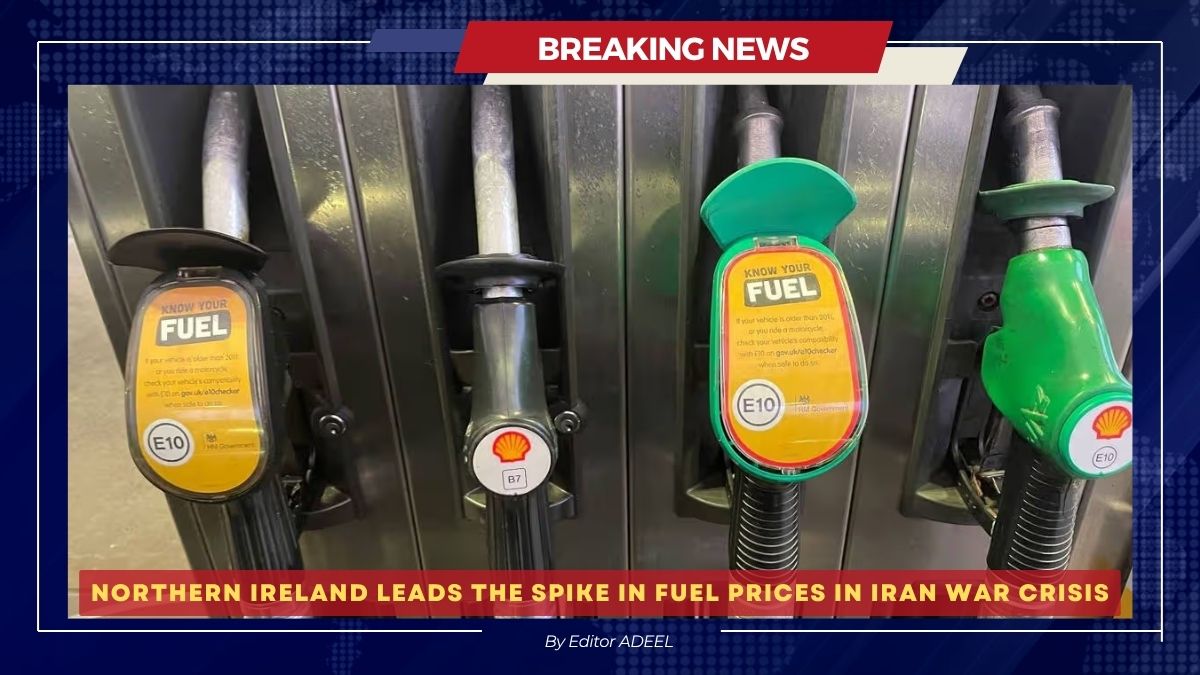
Northern Ireland has registered the highest increase in fuel prices in the UK since the beginning of the Iran war, as the cost of diesel is rising at an alarming rate and causing more pressure to households and businesses. Recent statistics indicate that the price of diesel in Northern Ireland has increased by about 35 per cent since the end of February, and petrol has increased by about 19 per cent.
It is the sharpest rise in any region in the UK, and it overturns the long-held reputation of the area as one of the cheapest fuel prices.
The increased prices imply that drivers are paying a lot more at the pump. It is estimated that one 50-litre tank of diesel costs approximately £91 to fill, whereas it used to cost about £67 before the start of the conflict.
There has been a sharp rise in petrol too, which has risen to approximately £75 per tank, compared with its position of only £63 weeks ago.
Analysts attribute the boom directly to the current war in Iran, which has caused oil supply chains to be broken across the world. One of the reasons is the instability of the Strait of Hormuz, which is a major pathway through which approximately 20 per cent of the global oil flows normally.
The shocks in this area have caused sudden surges in wholesale oil prices, which are currently being transferred down to consumers.
Fuel prices in the rest of the UK have also shot up, with an average increase of 30 per cent in diesel and 16 per cent in petrol. Nevertheless, the spike has been experienced in Northern Ireland more than in any other region, closing the distance that used to be there between it and more expensive regions like Scotland and rural England.
Businesses that are dependent on transport, especially the logistics and agricultural sectors, are feeling the most acute effects. Goods transportation has been the worst affected as diesel is also reliant on global gas oil markets, which have been volatile to the extreme since the conflict has escalated.
The stability of the supply is also of concern. Although authorities are denying that fuel supply chains are disrupted, temporary shortages and panic purchasing have been reported in certain regions, making the situation even worse.
Industry analysts caution that the crisis will only be aggravated if the conflict persists. Being already strained, a long-term disruption can push the prices further, worsening the cost-of-living crisis and affecting economic growth.
Until further notice, drivers in Northern Ireland -as well as in the UK- are being advised to pay special attention to fuel prices and implement cost-reduction strategies because the uncertainty in the international energy markets does not appear to be dissipating.
