

Education has changed significantly over the past years. From the curriculum to the way students learn, everything is different nowadays. This is because society has evolved, and technology has impacted the education system too.
Students now can take online classes, which provides numerous benefits. For this reason, e-learning is much more appealing, as it opens up many opportunities.
Today’s learning differs from yesterday’s in that it enables students to move at their own pace and find plenty of resources to expand their knowledge.
Nowadays, you have the freedom not to be physically present in the classroom and still attend classes. This would not have been possible in the past, and it’s essential to acknowledge technology’s role in this improvement.
Here are the 5 key differences between present education and past education.
Table of Contents
5 Advanced Differences Between Today’s Learning and Yesterday’s
A shift from passive to active learning
When thinking about the learner’s profile from the past, this image comes to mind: you sit, listen and answer your teacher’s questions, doing as told. This is called passive learning, which is common in the traditional education system.
The teacher communicates a lot of information that students have to understand at once, and this offers few opportunities for teachers to check whether they have grasped the content. Moreover, passive learning can lead to boredom because students don’t engage in the topic.
Today’s education system has improved, focusing more on active learning compared to the past. This approach is student-centred, allowing learners to participate in discussions and activities. This helps them develop critical thinking skills and engages them more; thus, they find it easier to understand the topic.
Moreover, active learning encourages innovation and creativity and empowers students to create their own learning experiences. Unlike passive learning, active learning fosters a skill set that will benefit students later in life.
Passive learning focuses on memorization instead of sense-making, which doesn’t provide long-term benefits.
Endless resources in present education
In the past, there were limited teaching and learning resources, and they consisted of blackboards, books, and a few other basics. Today’s education has significantly improved, as it provides endless resources that students find exciting.
The digital classroom is not a future concept that one can only dream of – it is a reality of the actual education system. Online learning enables students to rapidly access the information they need and ensures it is customizable and matches their needs – all it takes is one click.
The digital classroom also ensures students are better equipped for employment. This isn’t easy to achieve in a traditional classroom that focuses more on the theoretical aspects and doesn’t enable students to practice what they learn.
Digital learning allows students to develop different skills that will help them get relevant jobs. In other words, it prepares students for the natural world and the different challenges they may face along the way.
Flexibility in today’s learning
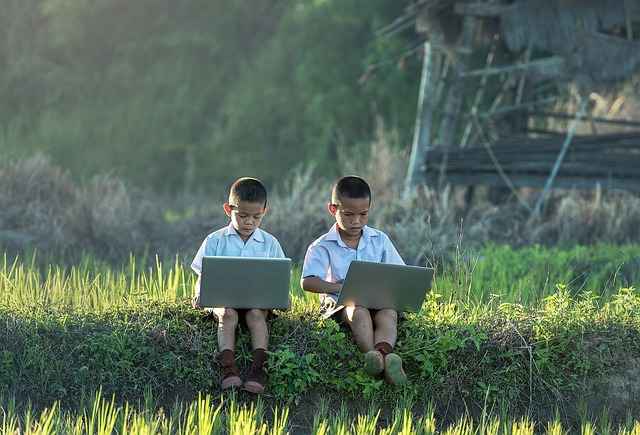
Flexibility is another significant difference between today’s learning and yesterday’s. Students can learn at their own pace, whenever and wherever they want, which isn’t possible in traditional classrooms.
Commuting is no longer an issue; you can study from home if that’s what you prefer. All you have to do is look for the best tutoring websites and pick what suits you the most, and then you’re ready to begin your digital learning journey. Online classes allow you to study in a setting that is right for you – whether it’s a library, a coffee shop, or a park.
It doesn’t matter where you choose to study; as long as you have a laptop or tablet and a reliable internet connection, it’s up to you to decide where your study sessions will take place.
Today’s learning opportunities also take away the pressures from traditional learning. Unfortunately, competition is common in traditional classrooms, affecting students’ mental health. Not everyone can handle the pressure in the classroom setup, making students vulnerable to developing symptoms of anxiety and depression.
On the contrary, digital learning focuses on creating an environment more conducive to learning at your own speed, without the unnecessary pressure of competing with others. You can read notes and revise at a time when you can focus best. This can also reduce stress because you don’t have a fixed schedule.
For instance, you can create your revision timetable before an exam and prioritize the most important topics. With the proper techniques and resources like revision websites, students can efficiently prepare for an exam without letting stress overwhelm them.
Differences in cost
Cost is a critical factor in education. Traditional education involves different expenses, such as accommodation, activity fees, classes, meals, and books. However, things are different nowadays, as online learning decreases costs significantly.
You no longer have to pay for paper handouts and other school supplies. In the past, one could never have imagined this would be possible. Supposing you lack in budget, you can easily use a virtual setup.
Digital classrooms remove the need for paper, which can not only be costly, but harmful to the planet too. Students can access resources online, so they don’t need to keep separate books for studying.
They can use the same resources yearly because they don’t damage or dull after use. This saves costs while also teaching learners to be environment-conscious.
Diversified assessment in today’s learning
Back in the past, there were only four types of assessment: worksheet, test, project, and essay. However, today’s learning involves multiple kinds of evaluation, like creating movies, art installations, podcasts, multimodal presentations, and more. Today, more mediums are available, making learning more effective than in the past.
In the past, the focus was on grades – numbers were the ones that illustrated a student’s performance. And yet, it didn’t provide an accurate insight into what students truly learned.
Nowadays, the focus is more on students’ knowledge than their grades. Whether they understand and can apply what they learned and their opinion about a specific topic matters. The diversified assessment methods in present education allow students to see them as informative instead of punitive.
They no longer feel pressured about grades; instead, they focus on checking their knowledge. Present education is based on life-long learning – the goal is to provide students with skills and knowledge they can efficiently use in the future.
Frequently Asked Questions (FAQs)
1. Is personalized learning suitable for all students?
Absolutely! Personalized learning aims to cater to individual learning styles, making it a beneficial approach for students with varying needs and abilities.
2. How can educators balance traditional teaching methods with modern technology?
Successful integration involves understanding the strengths of both approaches and finding a harmonious balance that enhances the overall learning experience.
3. Are there any potential drawbacks to data-driven learning?
While data-driven learning offers personalized insights, privacy concerns need to be addressed to ensure the ethical use of student data.
4. What skills are considered essential in today’s learning landscape?
Critical thinking, creativity, adaptability, and effective communication are among the key skills emphasized in modern education.
5. How can students actively engage in the learning process?
Active participation through discussions, collaborative projects, and the use of interactive learning tools can significantly enhance student engagement and understanding.
6. How is today’s education different from the past?
Initially, education depended on conventional strategies for correspondence and education, like blackboards and textbooks. Today, innovation has empowered a more intuitive and drawing-in opportunity for growth. It also lets you utilise online reading material, online assets, and virtual learning conditions.
Conclusion:
there are several significant differences between today’s learning and yesterday’s. The advancement of technology has revolutionized the way we learn and access information. Today, we have access to vast amounts of information through the internet, making it easier for us to learn and acquire knowledge. With online learning, students can access courses and lectures from anywhere in the world and learn at their own pace.
Moreover, today’s learning is more student-centred, with educators emphasizing critical thinking, problem-solving, and creativity. In contrast, yesterday’s learning was more teacher-centred, with educators focusing on rote memorization and following instructions.
Another significant difference is the use of technology in classrooms. Today, students use computers, tablets, and smartphones as tools for learning, whereas in the past, classrooms were equipped with chalkboards and textbooks.
In conclusion, today’s learning has become more accessible, interactive, and student-centred, with the integration of technology. As we continue to advance technologically, we can expect further changes and developments in the way we learn and acquire knowledge.
